5 Ancient Indian Beauty Secrets and the Rituals Behind Them
Explore ancient Indian beauty secrets, from ubtan to hair oiling. Learn the stories behind ancient Indian beauty rituals and how to approach them today.
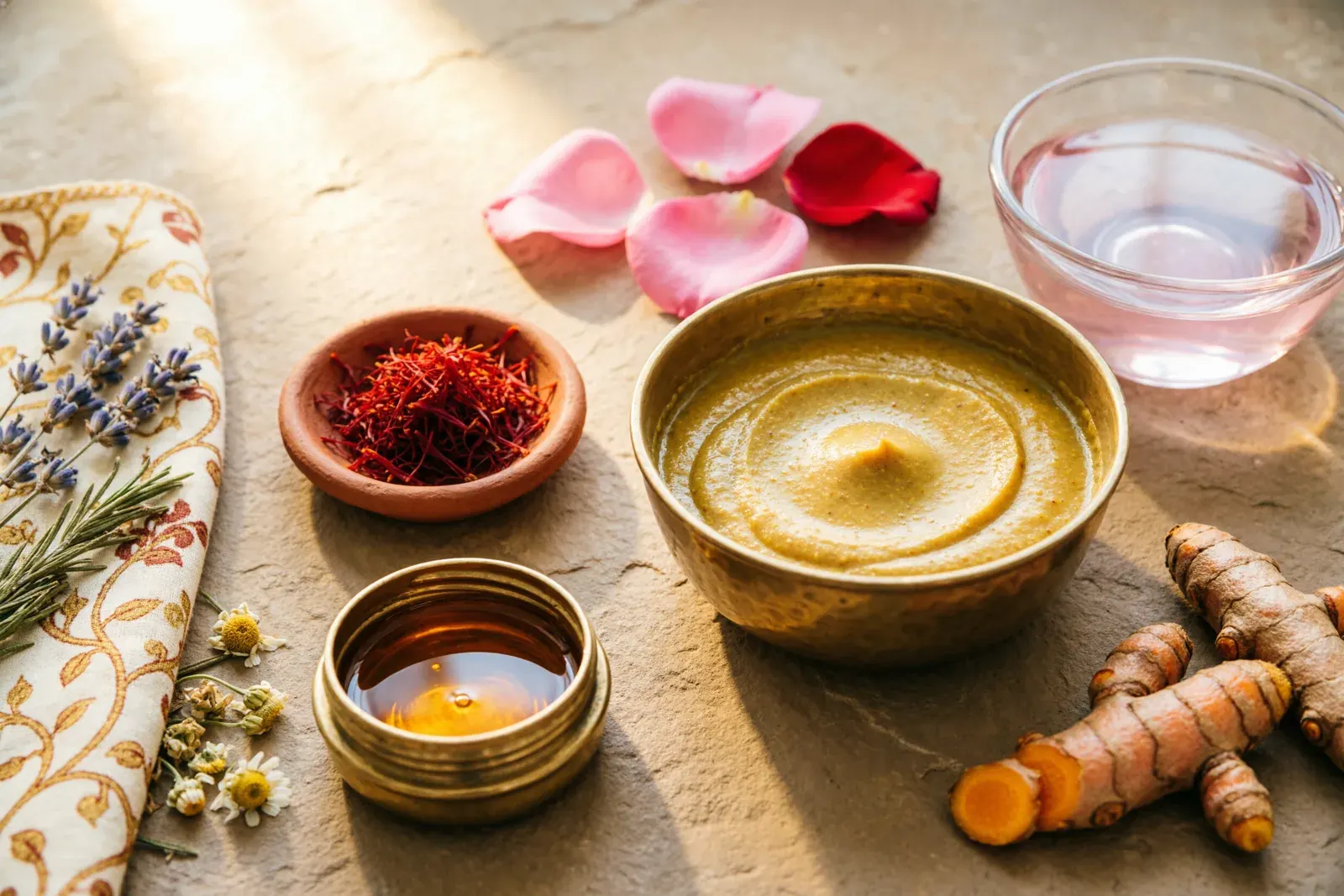
A bowl of freshly blended besan for a pre-wedding ceremony, warm oil gently massaged through lengths of hair, or the crisp floral aroma of rose water on a sultry afternoon: familiar beauty practices in India often carry lineages older than the products on modern shelves. Yet not every traditional ingredient is suited to every skin type, and a long history of use does not guarantee clinical results.
The lasting appeal of ancient Indian beauty secrets lies in the intentionality, shared heritage, and sensory mindfulness behind each practice. These rituals connect everyday grooming with family bonds, seasonal rhythms, and festive celebrations. Here are five foundational traditions worth understanding, exploring how they were historically used, why the rituals mattered, and how to approach them safely today.
The Dermatologist's Rule on Botanical Rituals
Traditional ingredients offer rich cultural value and soothing sensorial experiences, but historical longevity should never be confused with medical treatment. Botanical preparations cannot replace targeted dermatological care, active acne solutions, or broad-spectrum UV protection.
Where Ancient Indian Beauty Rituals Began
Personal care in classical India was never restricted to superficial cosmetic appearance. Historical treatises and early Ayurvedic texts describe elaborate regimens encompassing herbal body pastes, whole-body oil massages (abhyanga), floral rinses, therapeutic aromatics, and detailed hair care alongside daily hygiene and ceremonial rites.
Crucially, these practices varied significantly across geographic regions, local microclimates, available botanicals, and historical eras:
- Sensory Mindfulness: Unlike modern ten-step chemical routines, ancient rituals merged practical skin care with sensory pleasure and communal bonding.
- Communal Preparations: Preparing an herbal paste before a wedding served as a shared family gathering as much as a cosmetic treatment.
- Evolving Formulas: While some principles hold centuries-old written documentation, home recipes continually adapted based on local harvests.
5 Ancient Indian Beauty Secrets and the Practices Behind Them
| Traditional Ritual | Historical Role | Modern Dermatological Caution | Best Suited For |
|---|---|---|---|
| Ubtan | Herbal cleansing & body polish | Avoid abrasive physical scrubbing on inflamed acne | Normal to dry body skin |
| Saffron (Kesar) | Luxurious brightening preparations | Botanical extracts alone cannot erase deep melasma | Dull or tired complexions |
| Hair Oiling | Scalp massage & strand nourishment | Heavy oils can worsen dandruff and fungal dermatitis | Dry, coarse, or textured hair |
| Haldi | Celebratory ceremonies & skin paste | Raw kitchen powders cause contact dermatitis and staining | Resilient, non-sensitive skin |
| Rose Water | Floral toning & delicate hydration | Choose pure hydro-distillates free from added fragrance | Refreshing all skin types |
1. Ubtan: The Herbal Cleansing Paste
Ubtan is a ceremonial and everyday paste traditionally formulated from chickpea flour (besan), finely milled turmeric, and a blending liquid such as milk, yoghurt, or rose water. Widely associated with pre-wedding auspiciousness and ceremonial cleansing, it is smoothed onto the skin and gently rinsed away.
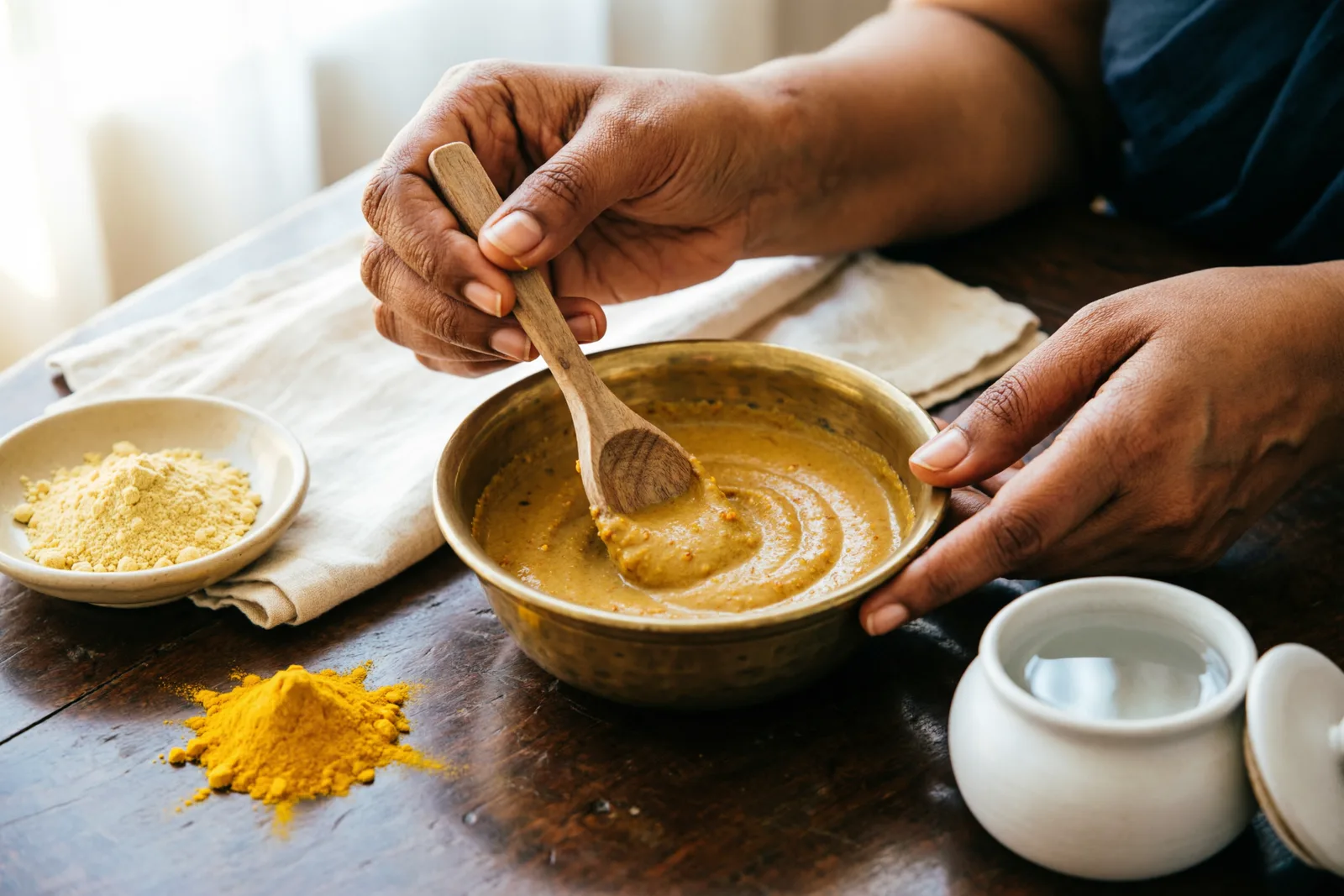
Among traditional skincare rituals, ubtan stands out because the preparation itself constitutes part of the mindfulness practice. Mixing the paste fresh invites a moment of intentional self-care.
In modern practice, however, avoid aggressive physical rubbing—especially on broken skin or active acne. Coarsely ground flour behaves as a mechanical abrasive that can compromise your protective epidermal barrier.
2. Saffron: A Cherished Botanical in Classical Formulas
Saffron's vivid golden hue, complex aroma, and painstaking harvesting made it one of the most treasured botanical commodities in historical cosmetics. It features prominently in royal preparations, perfumed night pastes, and classical facial oil formulations like Kumkumadi.
While its antioxidant properties are widely celebrated, it is important to maintain realistic expectations:
- Formula Over Single Botanicals: Saffron alone cannot reverse hormonal pigmentation, sun-induced photoageing, or deep wrinkles.
- Sensory Elevation: The true strength of saffron lies in elevating a skincare routine into a luxurious ritual, rather than serving as an overnight dermatological cure.
3. Hair Oiling: Communal Care Passed Across Generations
Hair oiling (champi) is equal parts nourishing grooming and an intimate familial ritual. Depending on regional climates and harvests, cold-pressed coconut oil, sesame oil, mustard seed oil, or amla-infused infusions have served as traditional staples.
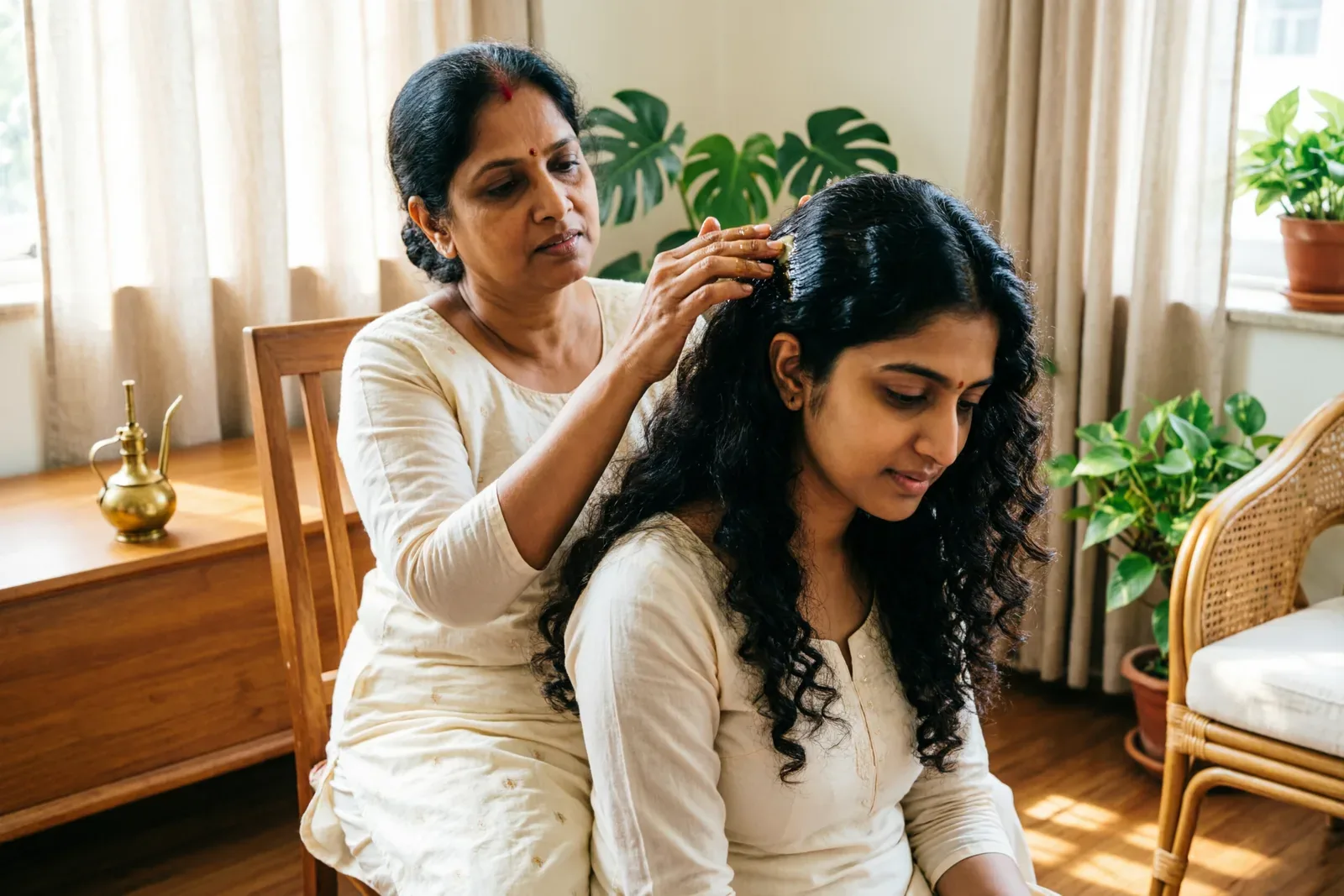
A small amount of warm oil massaged gently into the scalp and brushed down through lengths delivers tangible mechanical benefits:
- Lubrication: Coating lengths in plant lipids reduces cuticle friction and prevents mechanical breakage during washing.
- Scalp Precautions: If your scalp is naturally oily, itchy, or susceptible to seborrhoeic dermatitis (dandruff), heavy oiling feeds the Malassezia yeast that causes flaking. Focus application on mid-lengths and ends rather than saturating the scalp.
4. Haldi: Turmeric Beyond the Face Mask
Turmeric is inextricably linked with joyous milestone celebrations in Indian households, most notably the vibrant pre-wedding haldi ceremony. The ritual unites families, carrying an unmistakable cultural identity of renewal, protection, and festive warmth.
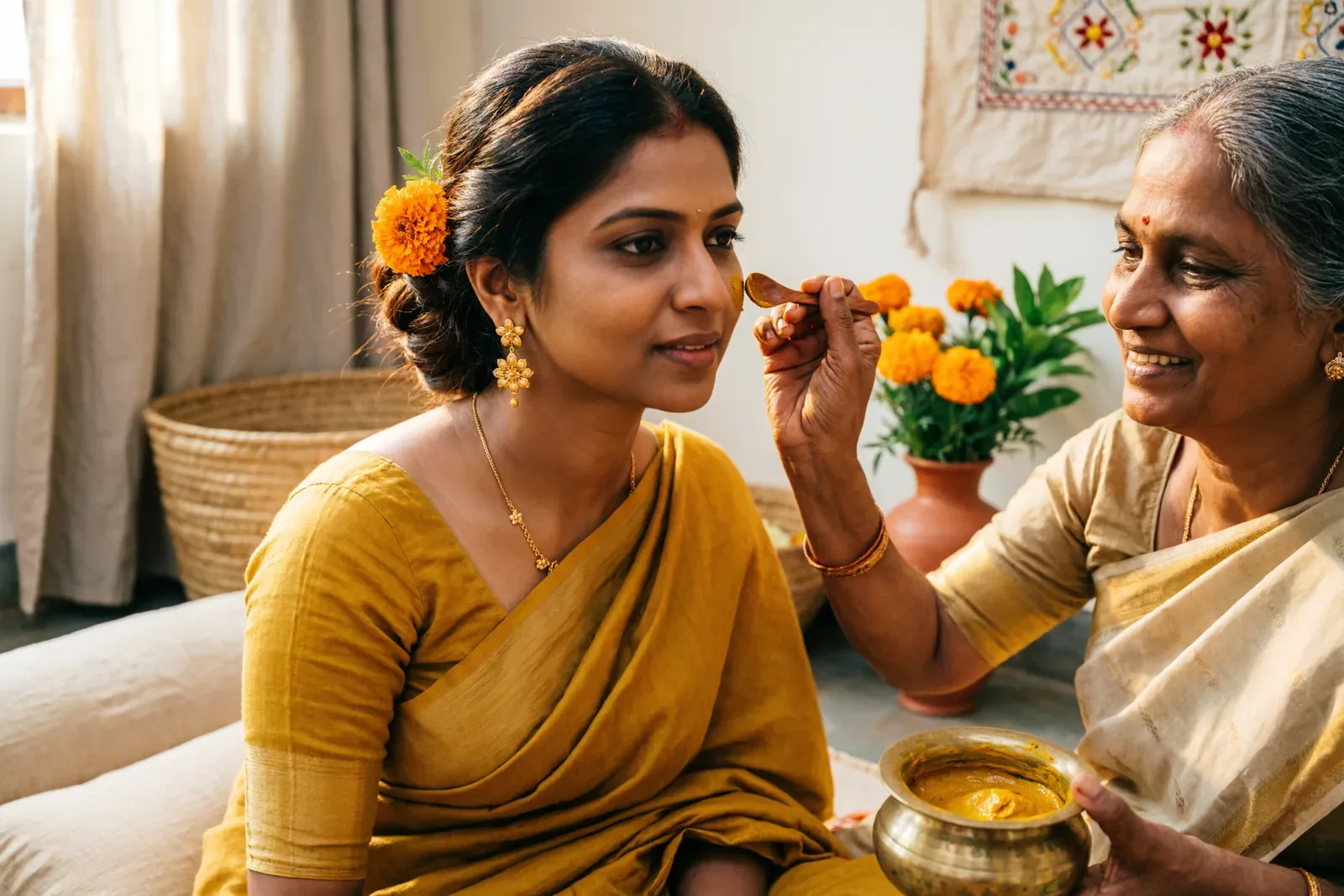
Cultural symbolism, however, should not be conflated with clinical performance:
- Kitchen Turmeric Risks: Raw cooking turmeric frequently contains additives or high levels of curcuminoids that readily stain fabrics and induce contact dermatitis on facial skin.
- Avoid Harsh Additives: Never mix turmeric with lemon juice or acidic kitchen vinegar, which strips the acid mantle and sparks severe irritation.
5. Rose Water: Fragrance and Gentle Everyday Refreshment
Hydro-distilled rose water (gulab jal) holds a celebrated pedigree across Indian perfumery, courtly steam baths, and culinary arts. A fine mist of natural floral distillate delivers an instantly cooling, aromatic sensory lift during hot summer afternoons.
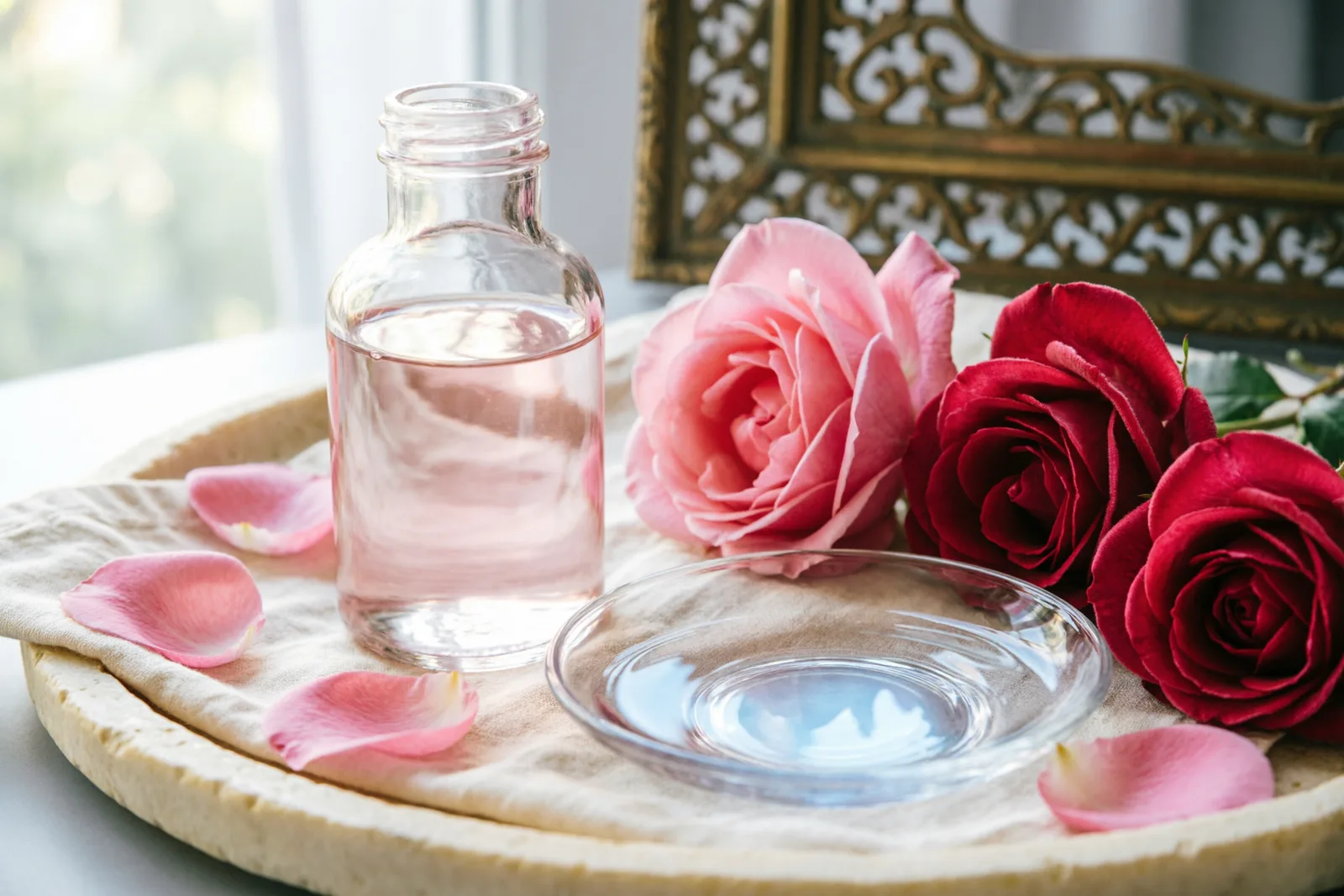
When integrating rose water into modern routines:
- Verify Purity: Select genuine hydro-distilled rose water without added synthetic fragrances, colorants, or denatured alcohol.
- Layer Deliberately: Treat rose water as an optional soothing mist before your moisturiser, not as a replacement for hydrating serums or sunscreen.
Bringing Ancient Wisdom into Modern Routines
The lasting lesson from these ancestral traditions is not that modern science should be abandoned for folklore. Rather, it is a reminder that personal care can be uncomplicated, mindful, and tailored to the individual.
To adapt traditional rituals responsibly:
- Prioritize Evidence-Backed Foundations: Maintain a non-negotiable daily trio of gentle cleansing, barrier moisturising, and broad-spectrum SPF before experimenting with botanical extras.
- Always Patch Test: Natural plant extracts are complex chemical compounds capable of triggering allergic reactions. Always test new formulas behind the ear or on the inner arm for 24 hours.
- Embrace the Ritual: Take time to breathe, massage your scalp deliberately, and connect with the tactile pleasure of caring for yourself.
Conclusion
The enduring stories behind ubtan, saffron, hair oiling, haldi, and rose water prove that beauty care has always been rooted in community, comfort, and mindful daily rhythms. Looking back at ancient Indian beauty traditions grants us perspective rather than a mandate for kitchen experimentation.
By honouring the cultural soul of these rituals while validating products through modern formulation standards, you achieve the best of both worlds: timeless self-care supported by sound dermatological science.
Frequently Asked Questions
Are ancient Indian beauty rituals suitable for sensitive skin?
Not automatically. Botanical pastes, ground grains, and essential oils can provoke allergic reactions and mechanical irritation on sensitive or compromised skin. Always patch-test new preparations and consult a board-certified dermatologist if you suffer from rosacea, eczema, or active acne.
Did every region in India follow identical beauty traditions?
No. Regional botanicals, seasonal climates, and distinct family customs shaped what ingredients were accessible. Coastal areas historically favoured cold-pressed coconut oil, while northern regions often relied on mustard oil, sesame oil, and dried saffron threads.
Can traditional preparations replace daily sunscreen?
No. Homemade botanical pastes, natural oils, and floral extracts do not provide verified SPF protection against UVA and UVB radiation. Broad-spectrum sunscreen remains non-negotiable for preventing sun damage and hyperpigmentation.
Is homemade skincare always safer than formulated products?
No. Homemade kitchen recipes carry unpredictable concentrations, lack sterile preservation, and spoil rapidly, which invites microbial contamination. Professionally formulated, stabilized products are far more consistent and gentle on the skin barrier.
Can men incorporate traditional Indian grooming rituals?
Yes. Historical Indian wellness treatises describe holistic grooming practices like scalp massage (champi) and herbal body care for all individuals regardless of gender. Modern choices should simply align with your personal skin and hair requirements.
Related Articles
Explore more insights and stories from this category.
How to Apply Under Eye Cream: Where, When and How Much
Learn how to apply under eye cream with the right amount, placement and timing. See how to use under eye cream gently and avoid common skincare mistakes.
Benefits of Vitamin C for Skin: What Really Works?
Explore the benefits of vitamin C for skin, from antioxidants to uneven tone. Learn about vitamin C serum benefits, safe application and common mistakes.