Bed Design Guide: Types, Materials and Styles
Explore bed design ideas, compare materials and styles, and discover what suits your room. Find a simple bed design and practical tips for choosing well.
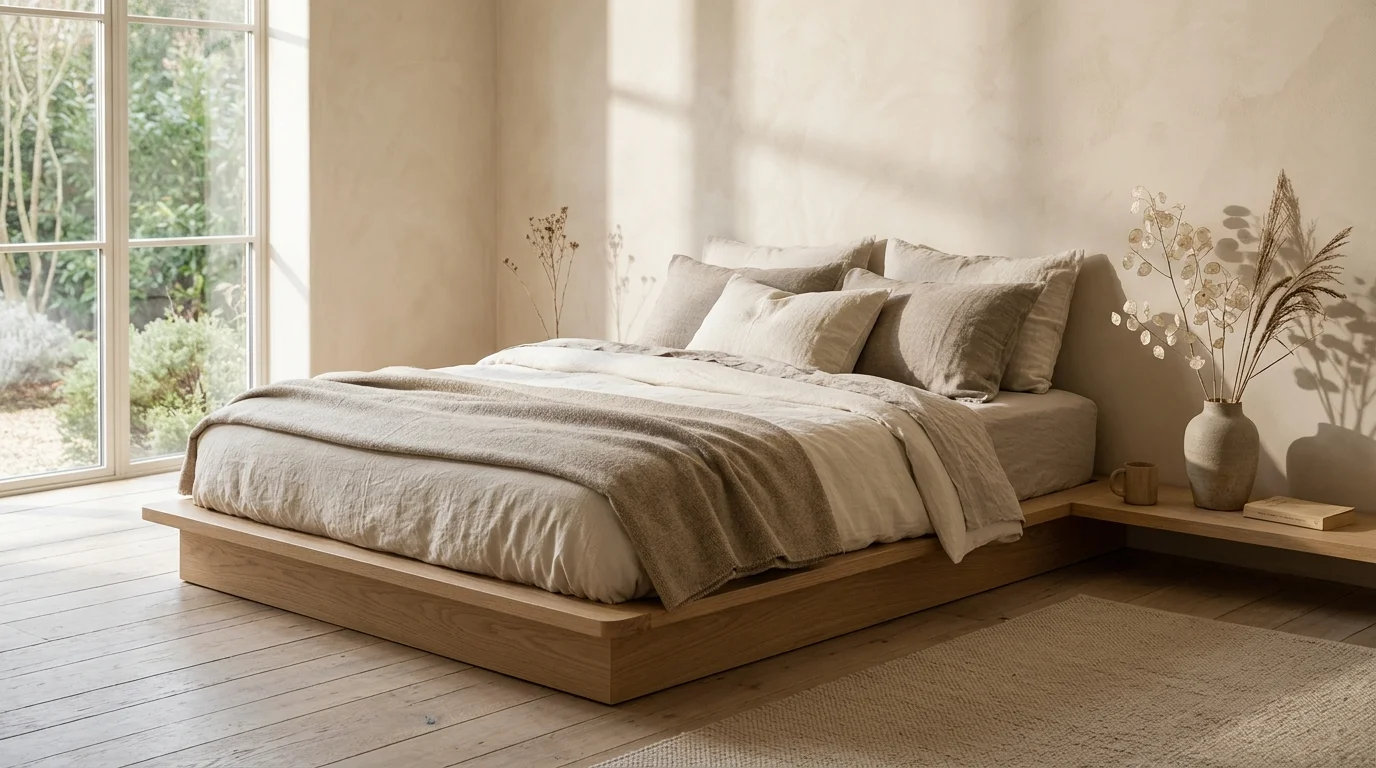
Choosing a bed involves more than finding a design that looks attractive. It needs to suit your bedroom size, sleeping requirements, storage needs, and overall interior style. From traditional wooden frames to modern upholstered options, the right bed design can help make your room feel comfortable, organised, and visually balanced.
With so many shapes, materials, and functional features available, knowing what to look for makes the decision straightforward. This guide explores popular bed types, commonly used materials, and design styles worth considering, along with practical tips to help you select a bed that complements your space without compromising on everyday functionality.
The Designer's Golden Rule
Always measure the outer dimensions of the complete bed frame—not just the mattress size—and leave at least 60–75 cm of walking clearance around the perimeter for effortless movement and drawer access.
What Are the Different Types of Bed Designs?
Bed designs vary according to their frame structure, headboard, storage features, and overall appearance. Understanding the main options helps you shortlist styles that suit your bedroom architecture and daily routine.
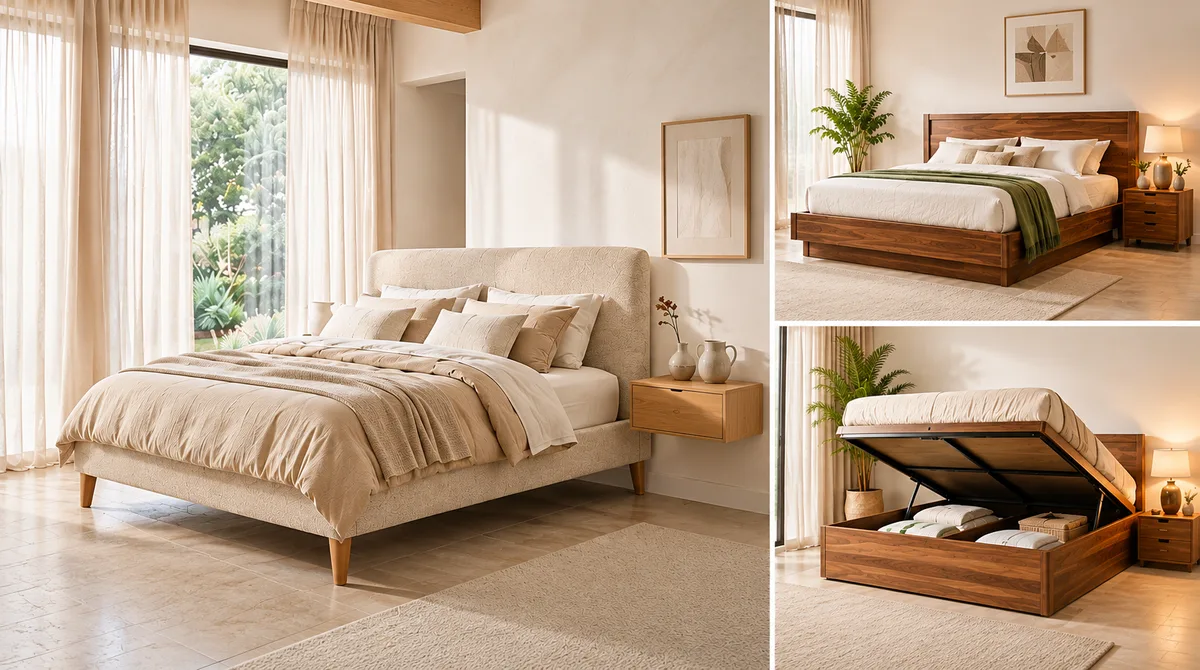
1. Platform Beds
Platform beds feature a low or moderately raised frame with a solid or slatted base that supports the mattress directly without requiring a box spring. Their clean lines and uncomplicated structure make them suitable for contemporary and minimalist bedrooms. They are an ideal choice if you prefer a streamlined look without elaborate detailing.
2. Storage Beds
Storage beds include built-in compartments beneath the mattress, usually accessed through slide-out drawers or a hydraulic lifting mechanism. They are particularly useful in apartments and compact bedrooms where wardrobe space is limited. Before choosing one, consider how much storage you need and verify that you have enough floor clearance to open drawers or lift the mattress comfortably.
3. Upholstered Beds
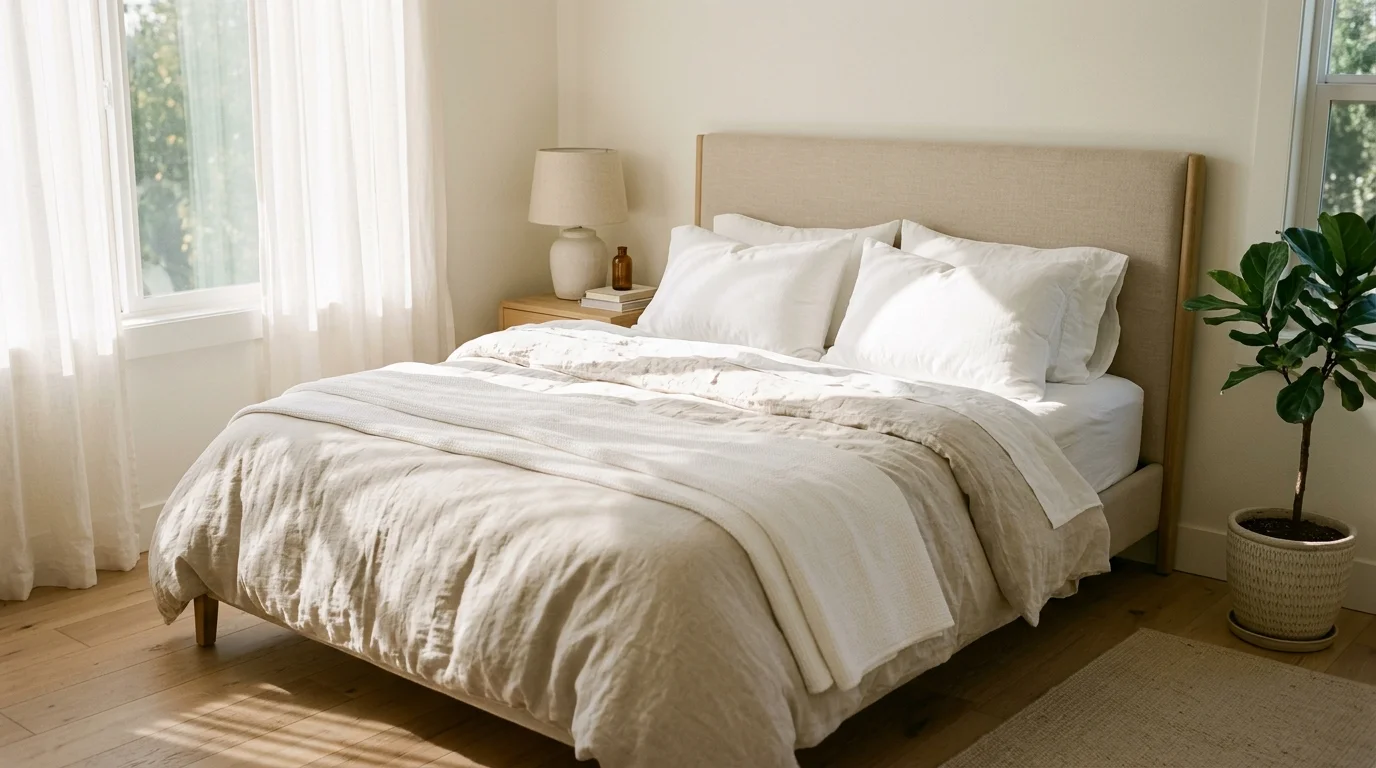
These beds have fabric, velvet, linen, or leatherette covering on the headboard and sometimes the entire side rails. Padded headboards make sitting up to read or relax significantly more comfortable, while textured fabrics add warmth and acoustic softness to the room. When choosing an upholstered frame, consider the cleaning requirements of the fabric, especially if you have pets or prefer lighter neutral shades.
4. Canopy and Four-Poster Beds
Canopy beds feature an overhead frame extending above the mattress, while four-poster beds incorporate vertical posts at each corner. Both create a striking, traditional appearance and serve as an architectural centerpiece. They generally suit larger master bedrooms with higher ceilings where the vertical structure will not overwhelm the room.
5. Bunk and Trundle Beds
Bunk beds stack one sleeping surface above another, maximizing vertical space in shared rooms. Trundle beds include a secondary pull-out bed on casters that slides neatly beneath the primary frame. Both options provide versatile sleeping solutions for children's bedrooms or homes that frequently accommodate overnight guests.
Which Materials Are Commonly Used in Bed Frames?
The material directly determines a bed's durability, maintenance requirements, weight, and visual weight. Comparing the core materials helps you decide which one best suits your lifestyle and climate.
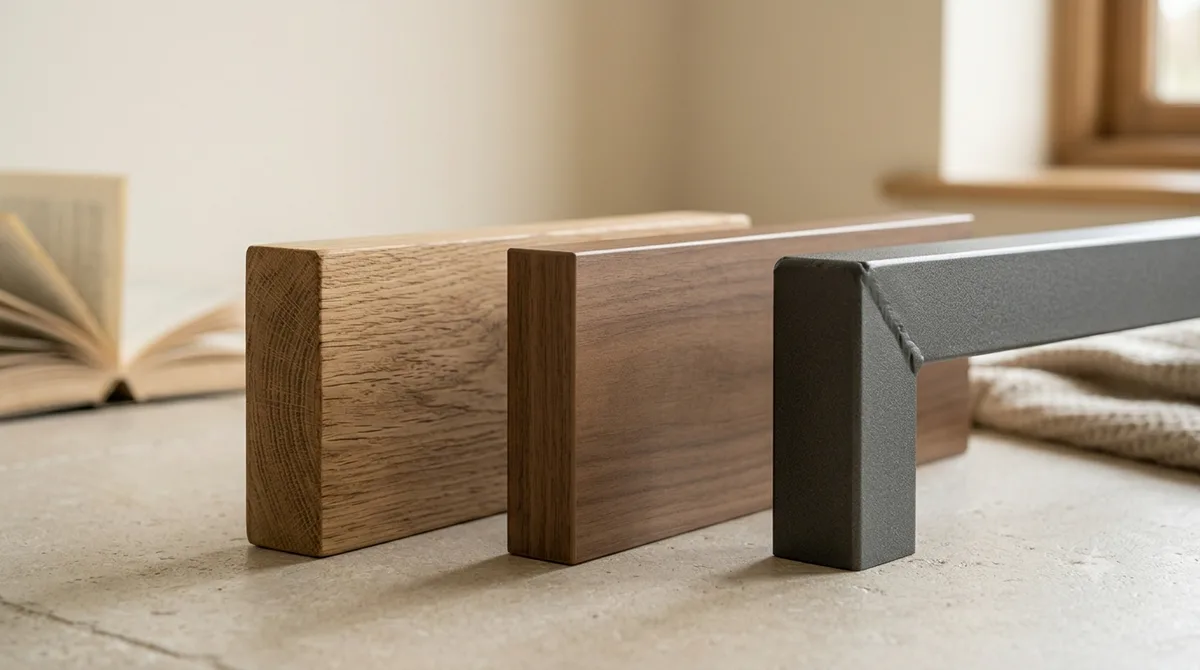
Solid Wood
Solid wood beds offer natural grain patterns, substantial weight, and enduring structural longevity. Popular hardwoods like teak, sheesham, oak, and walnut bring distinct warmth, grain depth, and richness. A wooden frame can complement both rustic and modern aesthetics depending on its finish and joint detailing.
When selecting solid wood, inspect the joinery (such as mortise-and-tenon joints) and ensure the wood has been properly seasoned. Keep in mind that solid timber frames are heavy and less convenient if you relocate often.
Engineered Wood
Engineered wood—including high-density fibreboard (HDF) and plywood—is widely used in modern furniture design. Finished with durable laminates or natural wood veneers, it replicates the beauty of timber while offering moisture stability and versatile shapes.
Check the board thickness, edge banding, and assembly hardware. Protect engineered wood from standing moisture, and follow manufacturer guidelines for surface care.
Metal
Metal bed frames feature slender profiles, clean geometric lines, or decorative wrought-iron scrollwork. They excel in industrial, Scandinavian, and minimalist settings. Metal beds are lightweight, durable, and resistant to humidity. Ensure the frame has reinforced center support legs and powder-coated finishes that resist chipping and corrosion.
Bed Frame Material Comparison
| Material | Key Strengths | Maintenance Needs | Best Suited For |
|---|---|---|---|
| Solid Hardwood | Exceptional longevity, natural grain, heirloom quality | Periodic dusting, wood conditioning; avoid dry heat | Traditional, mid-century, and rustic interiors |
| Engineered Wood | Cost-effective, uniform finish, versatile storage options | Wipe dry immediately; protect edge banding | Contemporary apartments, modern modular styling |
| Powder-Coated Metal | Slim profile, lightweight, easy assembly, pest-proof | Occasional screw tightening, wipe with damp cloth | Industrial lofts, minimalist rooms, guest rooms |
| Upholstered Fabric | Luxurious cushioning, acoustic dampening, cozy texture | Regular vacuuming, fabric spot cleaning | Master suites, Scandinavian and hotel-inspired decor |
Popular Bed Styles and Design Ideas for Different Bedrooms
A bed should complement the room rather than compete with its other architectural elements. These popular design concepts help balance aesthetics and everyday ergonomics:
Simple and Minimalist Designs
A minimalist bed design features clean horizontal lines, a low-profile headboard, and understated joinery. Neutral finishes in warm beige, soft grey, or natural ash keep the sleeping area serene. This style works exceptionally well if you like refreshing your duvet covers, cushions, and bedroom accessories with the seasons.
Contemporary Wooden Designs
Wooden beds with slatted, panelled, or floating headboards introduce organic texture without looking overly ornate. Coordinate the wood finish with your wardrobes, flooring, and bedside tables to create a cohesive, calming palette.
New-Style Upholstered Designs
If you want a tactile visual focal point, consider a plush channel-tufted or winged headboard in bouclé, linen, or velvet. An extended headboard that stretches behind the nightstands creates an upscale boutique-hotel aesthetic. Keep surrounding furniture restrained so the upholstered headboard remains the hero feature.
Space-Saving Designs
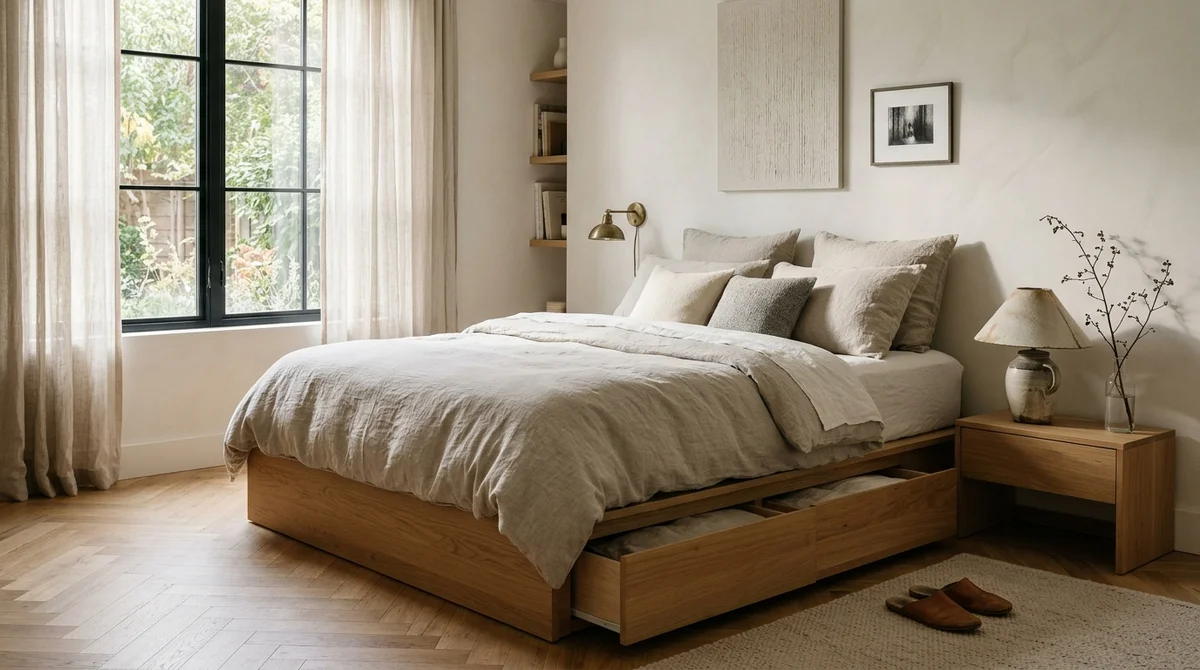
In compact urban bedrooms, platform beds with integrated headboard shelving or deep under-bed drawers keep floor areas uncluttered. When considering large 6x6-foot king sizes, verify that you retain at least 60 cm of walking clearance on all three open sides.
How to Choose the Right Bed for Your Bedroom
Before committing to a purchase, review these practical checkpoints:
- Measure the Available Space: Map out the bedroom floor plan. Account for door swings, wardrobe openings, and bedside clearances. Always measure the bed frame's external dimensions rather than assuming mattress size equals total footprint.
- Match the Bed to Your Daily Needs: Decide whether hydraulic storage, open drawers, or an easy-to-vacuum raised frame best serves your lifestyle.
- Verify Mattress Compatibility: Confirm that your existing or planned mattress fits the base dimensions and provides proper weight distribution for slatted or solid foundations.
- Evaluate Headboard Proportion: Check the headboard height against windowsill levels, wall sockets, and hanging art to ensure balanced visual scaling.
- Inspect Construction Quality: Look for solid corner brackets, center support beams with adjustable floor glides, and smooth drawer runners.
Avoid Common Purchasing Mistakes
Don't sacrifice walkway clearance for a grand headboard. A luxurious bed that blocks closet doors or makes walking difficult will quickly become a source of daily frustration.
Frequently Asked Questions
What is the difference between a king-size and queen-size bed?
A standard king-size bed is generally 180 cm wide, while a queen-size bed is typically 150 cm wide. Both share a standard length of 190–200 cm. In bedrooms under 3.5 meters in width, a queen-size bed often provides the ideal balance between sleeping comfort and walking space.
Is a wooden bed better than a metal bed?
Neither is objectively superior. Solid wood provides natural warmth, organic texture, and long-term durability, whereas metal offers a lighter visual footprint, easy relocation, and resistance to humidity. Choose based on your room's aesthetic, climate, and mobility needs.
Can I use any mattress with a storage bed?
Not always. Hydraulic lifting storage beds have calibrated gas-strut mechanisms designed for specific mattress weight thresholds. A mattress that is excessively heavy may make lifting difficult or prevent the mechanism from staying securely propped open.
How can I make a small bedroom look more spacious with a bed?
Opt for a low-profile platform bed with exposed legs, which allows natural light to flow underneath and creates the optical illusion of greater floor area. Keep the headboard slim and coordinate your bed linen with the wall color to minimize harsh visual contrast.
How often should I inspect and maintain my bed frame?
Inspect your bed frame every six to twelve months. Check and tighten loose bolts or hardware, inspect slats for warping, and ensure protective felt pads under the feet remain intact to safeguard your flooring.
Related Articles
Explore more insights and stories from this category.

How to Build a Raised Garden Bed: A Step-by-Step DIY Guide
Learn how to build a raised garden bed with simple DIY steps. Explore material choices, soil preparation and practical tips for a sturdy garden space.
How to Wash Pillows Safely Without Damaging Them
Learn how to wash pillows without damaging their filling or shape. Discover how to clean pillows by material, choose the right method and dry them well.