How to Care for Sunglasses: 10 Tips to Make Them Last Longer
Protect your shades from scratches and wear with practical sunglasses care tips. See how to clean sunglasses safely with smart sunglasses protection tips.
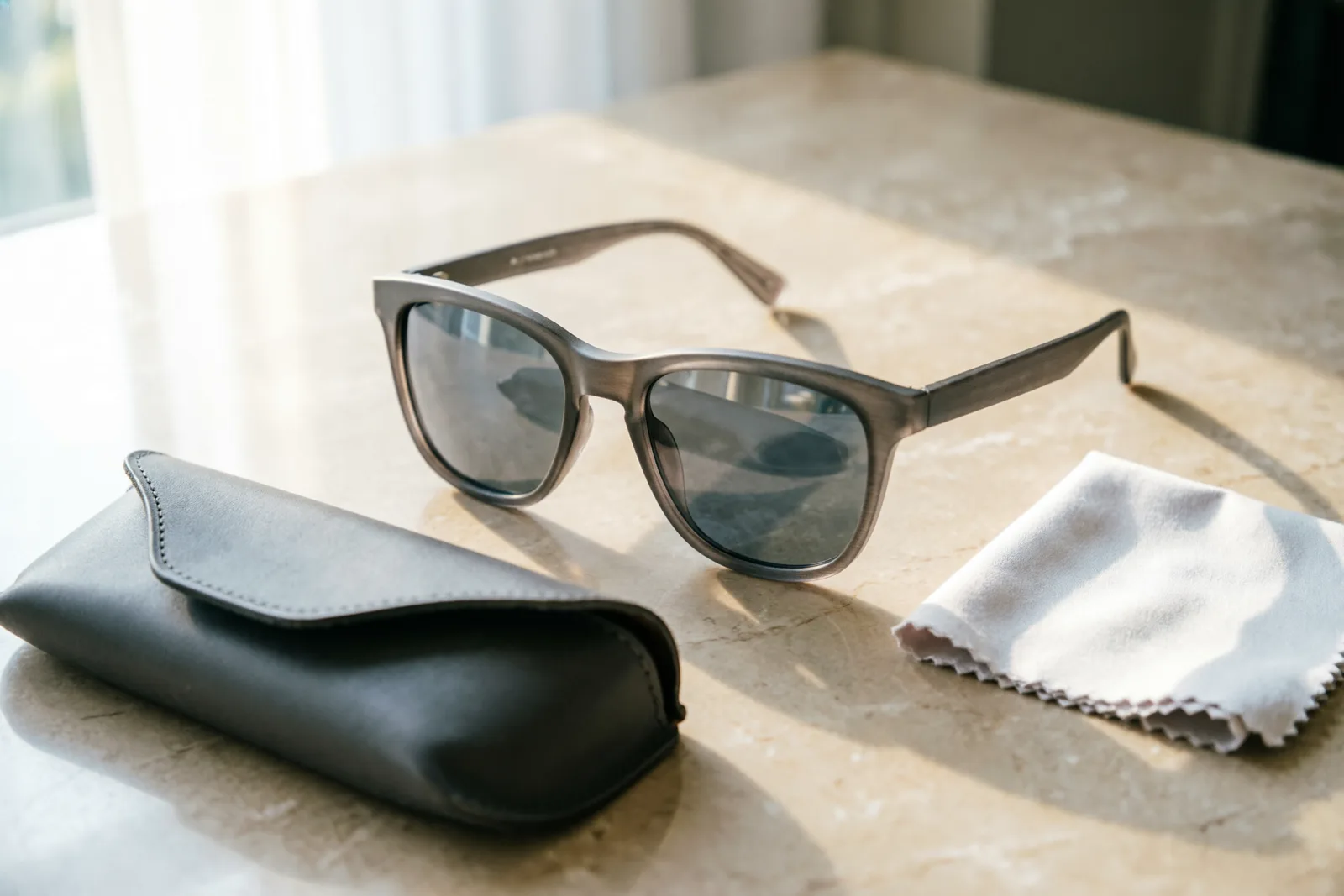
A good pair of sunglasses can quickly become a daily essential, which also means they face fingerprints, dust, cosmetics, heat, and the occasional careless drop. Small habits often decide whether your favourite pair stays clear and comfortable or ends up scratched, loose, or misshapen.
These sunglasses care tips focus on what matters most: cleaning lenses safely, handling frames with less strain, protecting delicate optical coatings, and storing your pair properly. You do not need a complicated maintenance kit—a few practical changes can help preserve the look, fit, and clarity of your sunglasses for years to come.
The Golden Rule of Eyewear Care
Never wipe dry sunglasses lenses. Rinsing away microscopic surface grit with lukewarm water before polishing is the single most effective habit to prevent spiderweb scratches.
Sunglasses Care Tips for Safe, Effective Cleaning
Cleaning is where well-meaning habits can cause avoidable damage. The aim is to remove grit and oil without dragging particles across the lens surface.
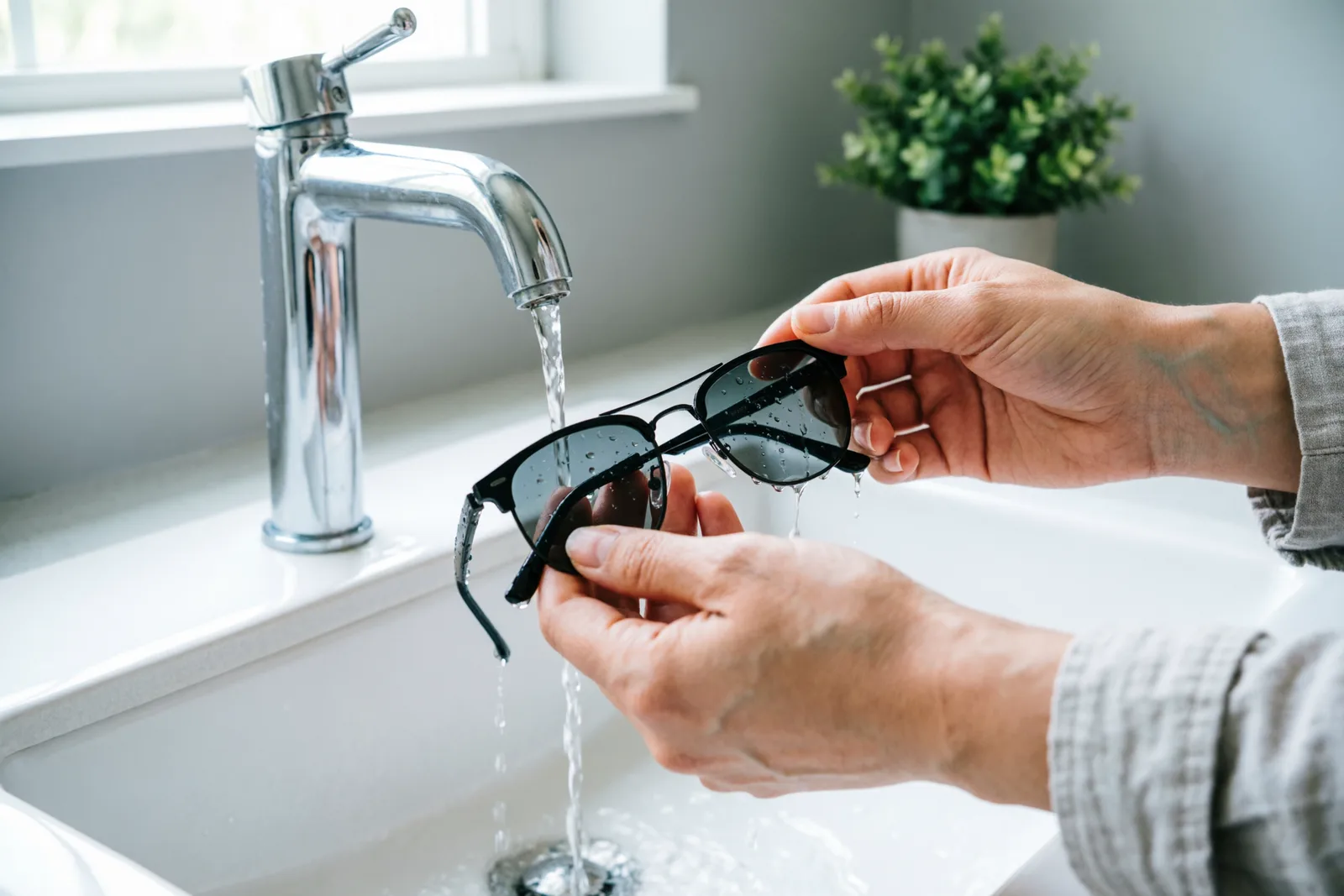
1. Learn How to Clean Sunglasses Without Scratching Them
Start by rinsing the lenses with lukewarm water to loosen dust and tiny particles. This reduces the chance of rubbing grit across the surface. If the manufacturer allows it, use a small amount of mild, lotion-free dish soap and gently clean the lenses, nose pads, and frame with clean fingertips.
Rinse thoroughly afterwards. Avoid hot water, which may be unsuitable for some lens treatments and anti-reflective adhesives. Knowing how to clean sunglasses this way is far more effective than simply polishing visible smudges with dry fabric.
2. Use a Clean Microfibre Cloth
Dry the lenses with a clean microfibre cloth designed specifically for eyewear. A shirt, tissue, napkin, or paper towel may seem convenient, but wood-pulp paper fibres and clothing textures can be abrasive to optical coatings.
Keep your microfibre cloth clean too. Wash it periodically in warm soapy water without fabric softeners. Dust, skin oil, or cosmetic residue trapped in a dirty cloth can simply smear grime back onto the lenses.
3. Skip Household Glass Cleaners
Window sprays, disinfecting products, and strong household cleaners are formulated with ammonia, bleach, or vinegar and are not intended for eyewear. Some harsh formulas can strip anti-reflective coatings, dissolve lens tints, or cause hazing.
Use an eyewear spray specifically formulated for coated optical lenses, or stick to mild soap and lukewarm water. If your sunglasses feature mirrored, polarized, or photochromic finishes, checking the brand's care guidance is especially worthwhile.
Avoid Common Wiping Traps
Tissues and clothing hems often contain tiny wood pulp particles or trapped dust. Over time, dry buffing with clothing leaves a permanent hazy halo of microscopic scratches on UV coatings.
Protect Lenses and Frames During Everyday Wear
Care does not stop once the lenses are clean. Repeated pressure, extreme temperatures, and direct contact with personal-care products can gradually alter how sunglasses look and fit on your face.
4. Put Them On and Take Them Off with Both Hands
Using both hands to put on and take off your sunglasses prevents repeatedly pulling one temple arm outwards. Uneven pulling gradually loosens the hinges, weakens frame joints, and causes the glasses to sit crooked on your nose.
Try not to push sunglasses onto the top of your head. Resting shades on your hair can stretch the frame wider, bend the bridge out of alignment, and transfer hair oils and styling products directly onto the nose pads and lens tops. Use a case or a protective pouch whenever they are not on your face.
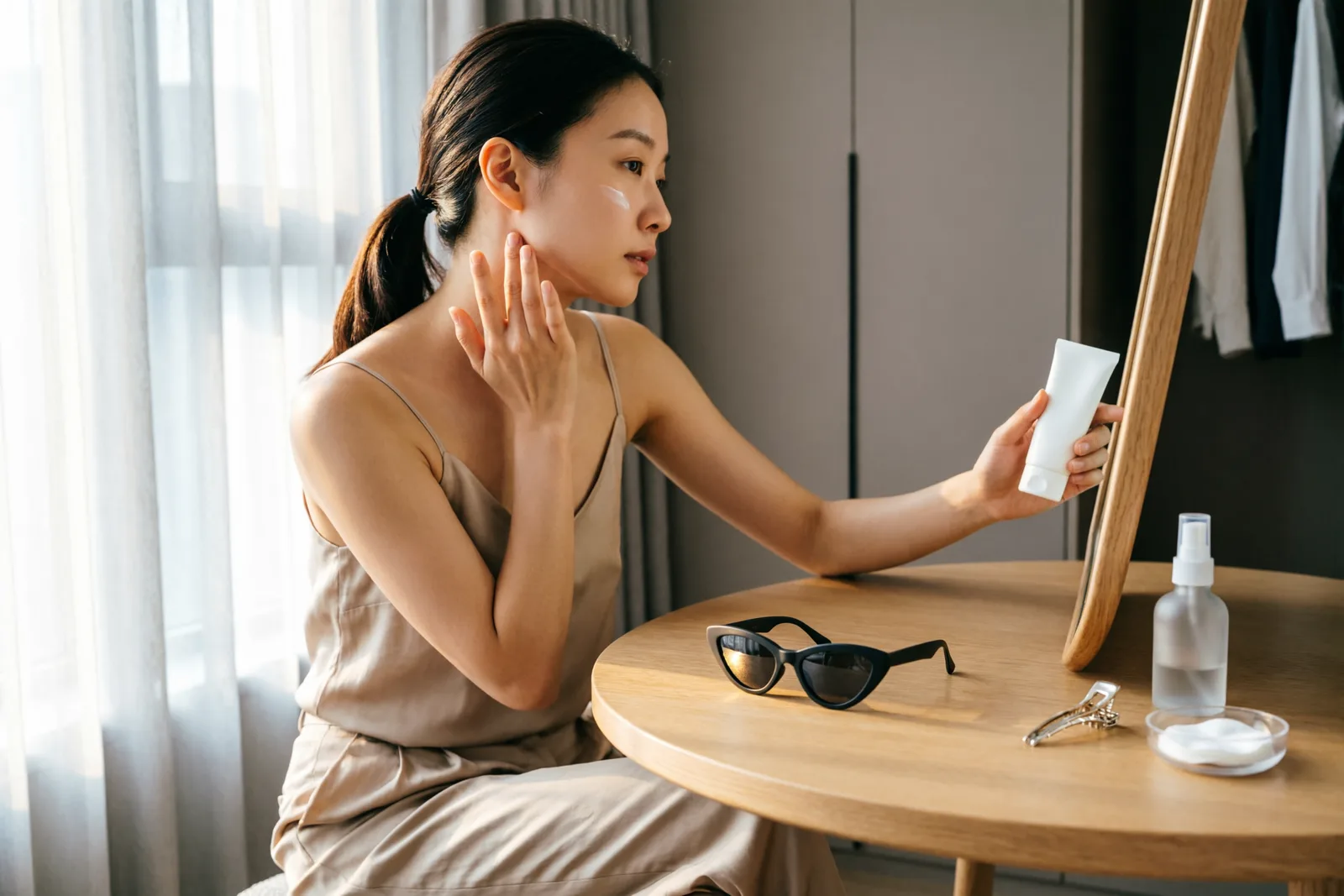
5. Keep Sunscreen, Hairspray and Cosmetics Away from the Lenses
Apply sunscreen, perfume, hairspray, facial mists, and moisturizers several minutes before putting on your sunglasses. Chemical sunscreens and alcohol-based sprays can degrade mirror treatments and leave oily films that are difficult to remove.
If product accidentally gets onto the frame or lenses, rinse it off promptly with lukewarm water rather than letting it dry and build up around the screws and nose pad crevices.
6. Do Not Leave Sunglasses in a Hot Car
A car dashboard or closed glove compartment under direct sun can easily exceed 60°C (140°F). Prolonged high heat can warp acetate frames, soften lens adhesives, bubble polarized films, and cause anti-reflective coatings to craze (develop tiny cracks).
Keep sunglasses in their case and take them with you when exiting the car. Keeping your shades out of hot vehicles is one of the simplest sunglasses care tips to turn into an everyday habit.
Sunglasses Protection Tips for Storage, Bags and Travel
Storage matters because the majority of scratches and bent hinges happen when sunglasses are not actively being worn. Smart sunglasses protection tips make the safest choice effortless, whether at home or on the go.
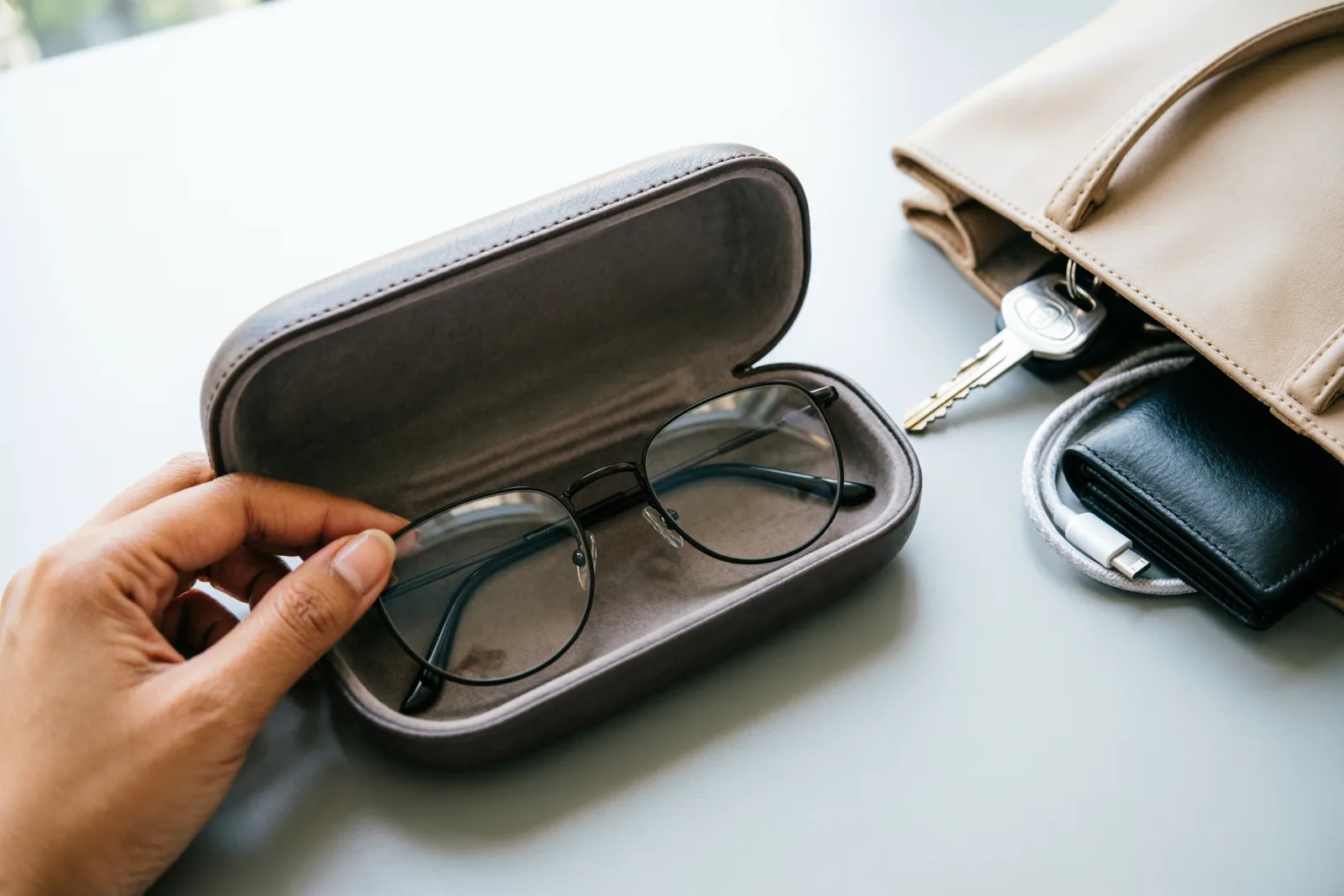
7. Store Them in a Protective Case
A hard-shell or well-padded case creates a durable shield against keys, coins, charging cables, and other hard objects that rub against frames in a bag.
Always place your pair inside once clean and dry. If you temporarily set sunglasses down on a tabletop without a case, always fold the temple arms and place them with the frame rims down—never rest the lenses face-down on a flat surface.
8. Give Sunglasses Their Own Space in Your Bag
Avoid squeezing an unprotected pair into an overcrowded handbag, gym tote, or backpack. Pressure from a heavy laptop, water bottle, or hardback book can crush acetate frames or snap delicate wire rims even if the lenses escape direct scratching.
Designate an upright internal bag pocket or dedicated slip compartment that accommodates the case without compression. When packing luggage for travel, place the case near the top center of your suitcase surrounded by soft clothing.
9. Check the Fit Before a Small Problem Becomes Bigger
If your sunglasses begin to sit unevenly, slide down your nose bridge constantly, or develop a noticeably loose hinge screw, address the change promptly before parts fall out.
Avoid bending the frame back into shape by hand, as cast metals and brittle acetates can snap under uneven force. An optical shop or eyewear professional can heat-adjust acetate frames or tighten screws with precision micro-screwdrivers in just a couple of minutes.
10. Inspect Lenses and Frames Regularly
Take thirty seconds every couple of weeks to inspect your sunglasses in natural light. Look for loose hinge screws, wobbling nose pads, hairline cracks, or discoloration in optical coatings.
Early detection allows you to replace a loose screw or worn silicone nose pad before you lose an entire temple arm during a holiday.
Quick Eyewear Care Reference
| Eyewear Component | Recommended Care Routine | What to Avoid |
|---|---|---|
| Coated & Polarized Lenses | Rinse with lukewarm water; dry with clean microfibre cloth | Tissues, paper towels, shirts, saliva, and window cleaners |
| Acetate & Metal Frames | Clean with mild lotion-free soap; adjust fit via professional | Leaving on hot car dashboards or bending frames by hand |
| Hinges & Hardware | Tighten loose micro-screws promptly; remove using both hands | Pushing frames atop your head; pulling one arm unevenly |
| Storage & Transit | Hard-shell case in an upright, dedicated compartment | Throwing loose into bags with keys, chargers, or heavy bottles |
Conclusion: Keep Your Sunglasses Looking Good for Longer
Good sunglasses care is mostly about consistency. Rinse away abrasive debris before wiping, use dedicated optical cleaning cloths, handle frames gently with both hands, and give every pair a protected case when not in use.

Once you know how to clean sunglasses correctly, the rest of the maintenance routine becomes completely intuitive. Keep these sunglasses care tips in mind during daily wear, and use sensible sunglasses protection tips when storing or travelling with your pair. A minute of thoughtful handling can help reduce avoidable scratches, warped frames, and unnecessary wear.
Daily Eyewear Ritual
Treat your sunglasses like fine jewellery rather than casual plastic accessories. A dedicated case in your bag and a clean microfibre cloth in your pocket will keep your shades looking pristine for years.
Frequently Asked Questions
Can salt water damage sunglasses?
Salt residue can dry on lenses and frames, leaving abrasive crusty deposits that are difficult to wipe away safely. After wearing sunglasses near the sea or beach, rinse them thoroughly with fresh lukewarm tap water to dissolve salt crystals, then pat them dry with a clean microfibre cloth.
Can I use pre-moistened lens wipes on sunglasses?
Use pre-moistened wipes only if they are specifically certified as safe for anti-reflective and coated eyewear lenses. Wipes with high concentrations of rubbing alcohol or harsh surfactants can strip delicate mirror coatings or dry out vintage acetate frames.
What should I do if my sunglasses get wet in the rain?
Do not rub wet lenses with your clothing. Raindrops often capture airborne dust and pollution. Rinse away any remaining grit under lukewarm running water if possible, or gently blot moisture with a clean microfibre cloth before returning the pair to its case.
Can scratches be polished out of sunglass lenses at home?
DIY polishing methods such as baking soda, car wax, or toothpaste are abrasive and will strip the protective anti-scratch, UV, or polarized coatings, making the optical distortion worse. Deep or distracting scratches require professional assessment to see if lens replacement is possible.
How should I store several pairs of sunglasses at home?
Keep each pair separated so frames and lenses do not rub together. A divided drawer insert, lined eyewear tray, or individual cases kept in a cool, dry wardrobe drawer work best. Keep them away from high-humidity bathrooms and direct sunlight.
Related Articles
Explore more insights and stories from this category.
How to Wash Pleated Clothes Without Losing Their Shape
Learn how to wash pleated clothes gently, from checking care labels to drying without damage. Find out how to wash a pleated dress and protect its folds.

How to Style a Plus-Size Pleated Skirt: Outfit Ideas
Learn how to style a skirt with plus-size pleated outfit ideas for work, weekends and parties. See how to wear a skirt with the right tops and shoes.