Places to Visit in Kanyakumari: Travel Tips and Highlights
Explore the top places to visit in Kanyakumari, from coastal landmarks to historic sites. Use this list of attractions and travel tips to plan your trip.
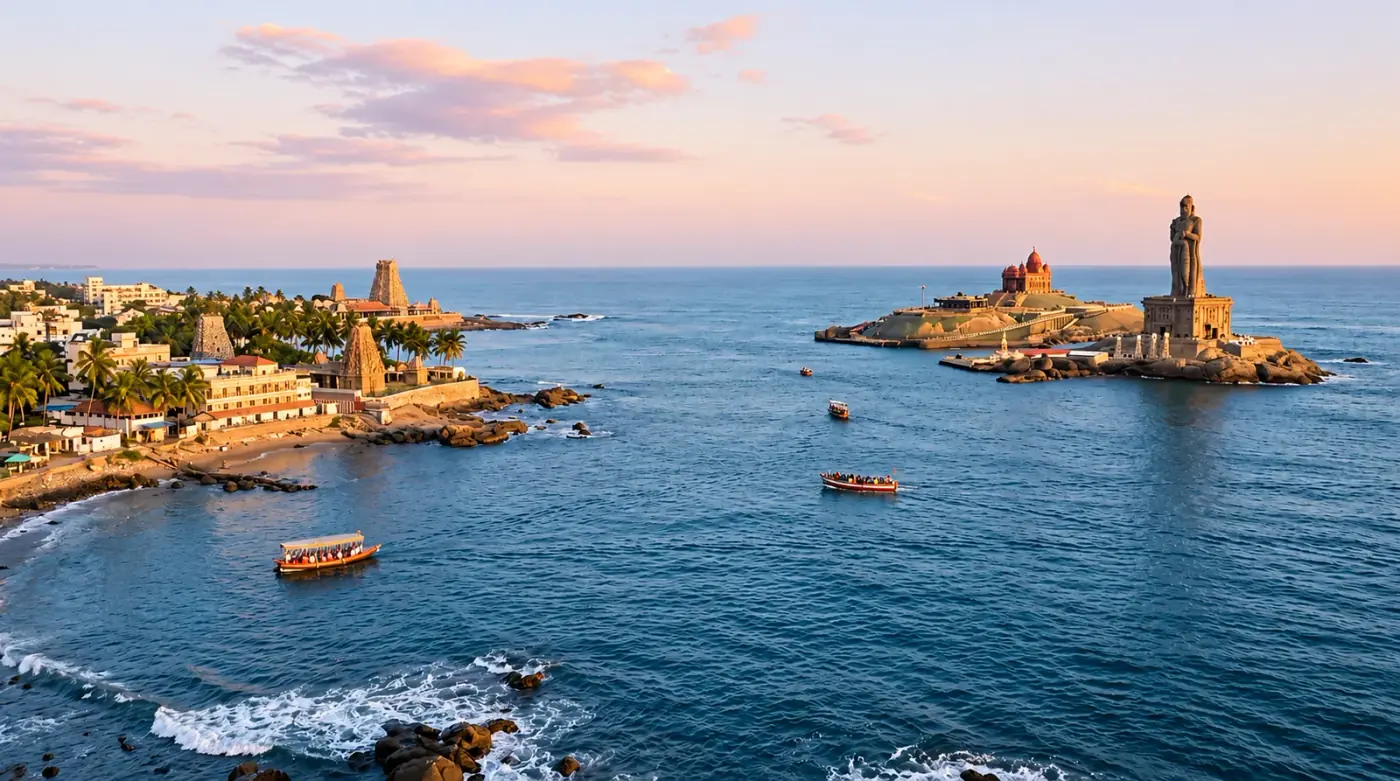
Standing at the southernmost tip of peninsular India, Kanyakumari—formerly Cape Comorin—is a place of profound geographical and cultural significance. It is here that the waters of three great bodies—the Arabian Sea, the Bay of Bengal, and the Indian Ocean—converge in a dramatic marine panorama known as the Triveni Sangam.
Beyond its famous sunrise and sunset horizon over open ocean, Kanyakumari is steeped in rich spiritual mythology, coastal colonial fortresses, and world-class wooden palace architecture. Whether you are arriving on a spiritual pilgrimage or taking a coastal road trip across South India, this curated travel guide highlights the five premier attractions, regional heritage wonders, and practical travel tips for your visit.
Sunrise & Sunset Spectacle
Because Kanyakumari is surrounded by water on three sides, you can witness both the sunrise and sunset over the ocean from the same shoreline. On full-moon evenings in April (Chitra Pournami), you can see the sun setting and the full moon rising simultaneously above the horizon.
Top 5 Places to Visit in Kanyakumari
These foundational attractions capture the spiritual essence, architectural achievements, and coastal landscapes of Kanyakumari.
1. Vivekananda Rock Memorial and Thiruvalluvar Statue
Perched approximately 500 metres offshore on two twin granite islets, these iconic maritime monuments define Kanyakumari’s horizon.
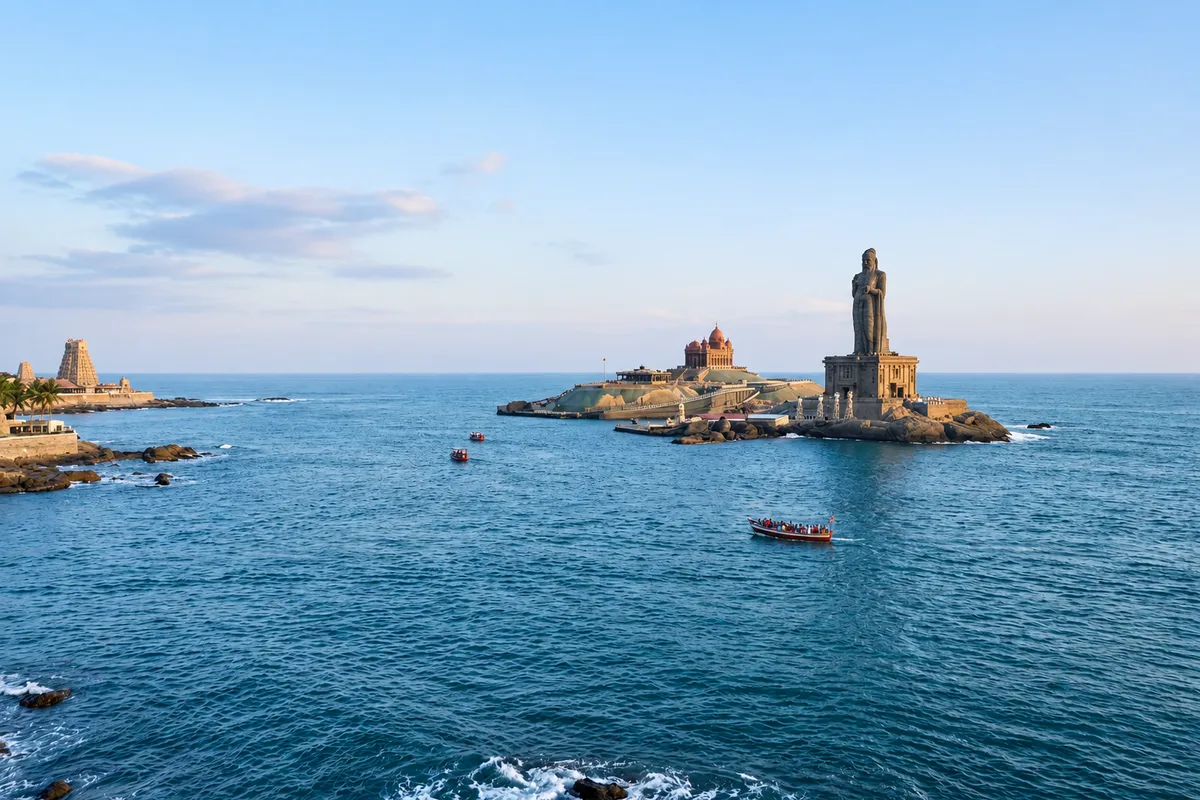
The Vivekananda Rock Memorial was constructed in 1970 to honor Swami Vivekananda, who meditated on this rocky outpost for three days in December 1892 before his historic voyage to the Parliament of the World’s Religions in Chicago. The memorial features the Shripada Mandapam (surrounding a sacred rock footprint attributed to the Goddess) and the Dhyana Mandapam meditation hall, where visitors can sit in serene silence accompanied by the sound of crashing ocean waves.
Standing on the adjacent islet is the colossal Thiruvalluvar Statue, honoring the celebrated Tamil poet and philosopher who authored the Thirukkural. Carved from 7,000 tons of solid granite by master sculptor V. Ganapati Sthapati, the statue stands exactly 133 feet (40.5 m) tall—symbolizing the 133 chapters of virtue, wealth, and love in the Thirukkural.
Regular ferry boats operated by Poompuhar Shipping Corporation run from the mainland jetty between 8:00 AM and 4:00 PM.
2. Bhagavathy Amman (Kumari Amman) Temple
Situated directly along the mainland shore, this ancient 3,000-year-old temple is dedicated to Goddess Kanya Kumari, the adolescent virgin manifestation of Goddess Parvati.
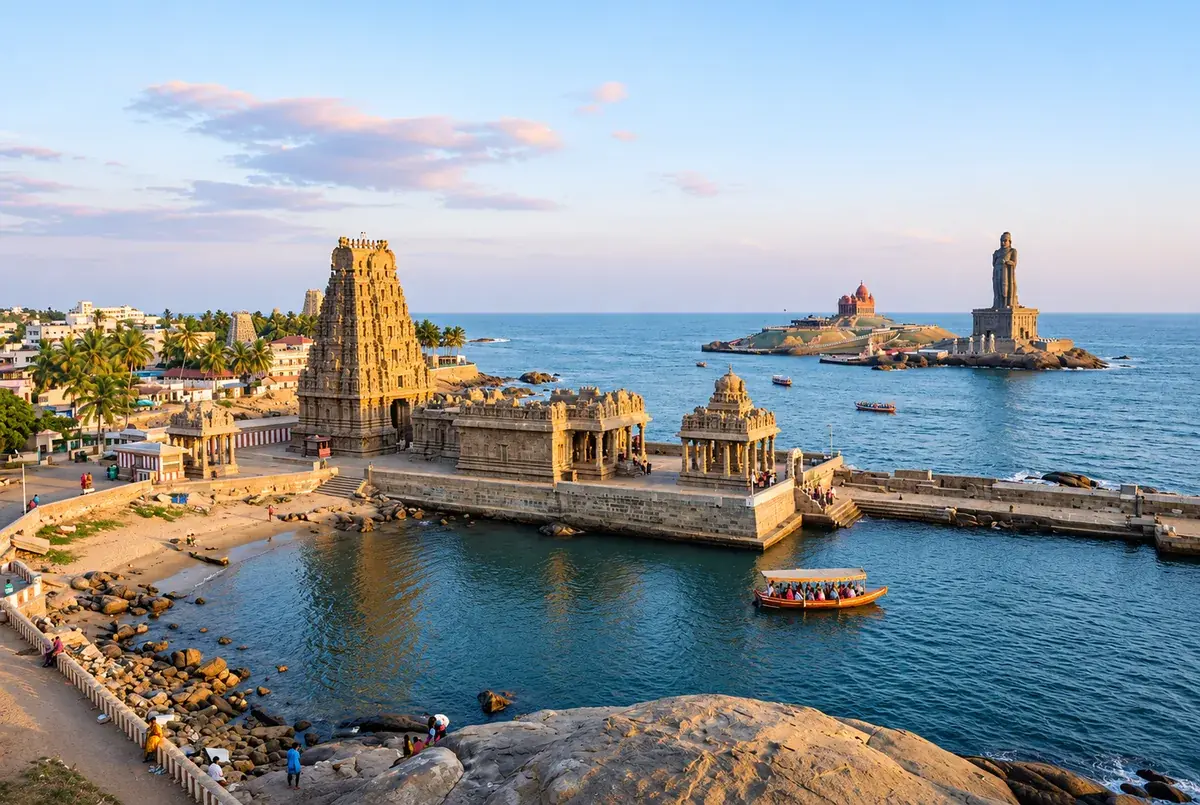
The sanctum is renowned for the deity's sparkling diamond nose ring, so brilliantly luminous that ancient maritime legend claims passing sea vessels mistook it for a coastal lighthouse and ran aground against the reefs. Male visitors are required to remove shirts before entering the temple corridors, and cameras are prohibited inside the inner sanctum.
3. Gandhi Memorial Mandapam
Completed in 1956, this pink memorial stands directly on the seashore at the spot where Mahatma Gandhi’s ashes were kept for public homage before being immersed into the confluence of the three seas on February 12, 1948.
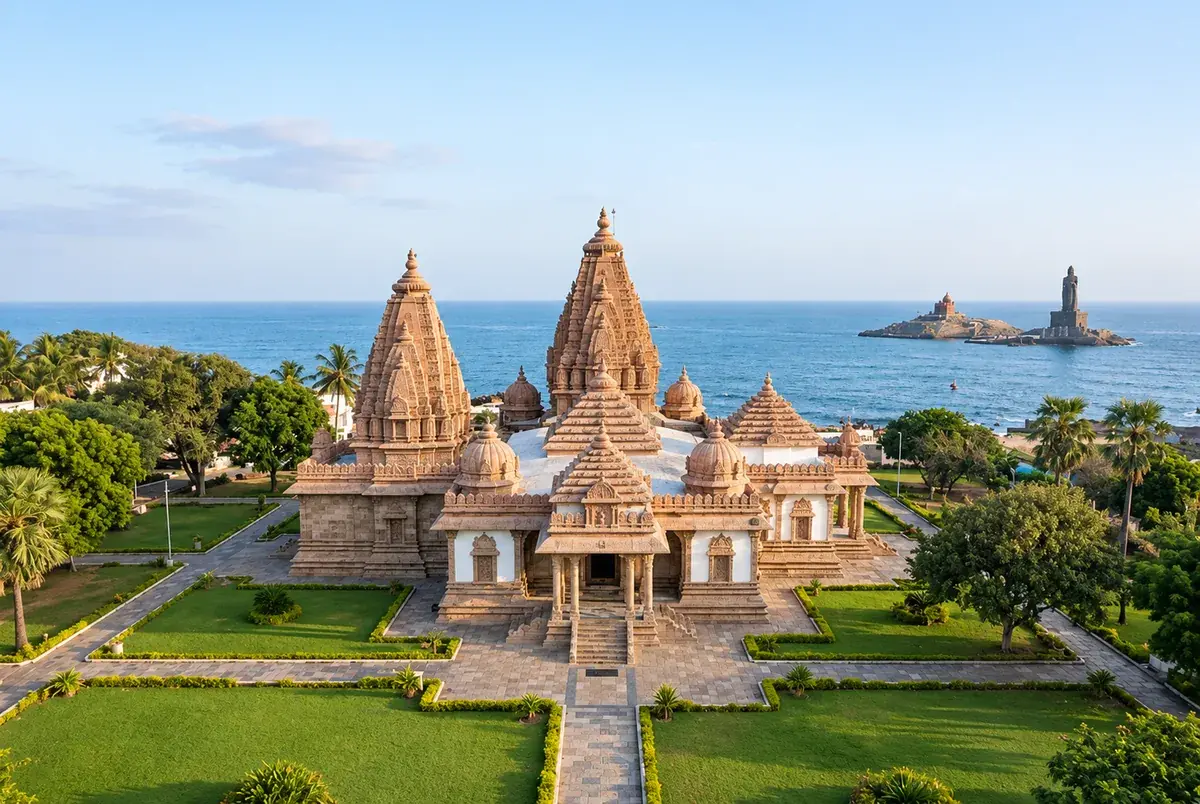
Designed in the style of a traditional temple with Islamic and Christian architectural motifs to reflect Gandhi's universal ethos, the central dome is engineered with an optical skylight aperture: at exactly 12:00 PM on October 2nd (Mahatma Gandhi’s birthday), the first rays of the midday sun illuminate the precise stone spot where the urn rested.
4. Vattakottai Fort
Located 7 km north along the coast, Vattakottai (literally "Circular Fort") is an 18th-century seaside granite citadel built during the reign of the Travancore Kingdom under the supervision of Flemish naval officer Captain Eustachius De Lannoy.
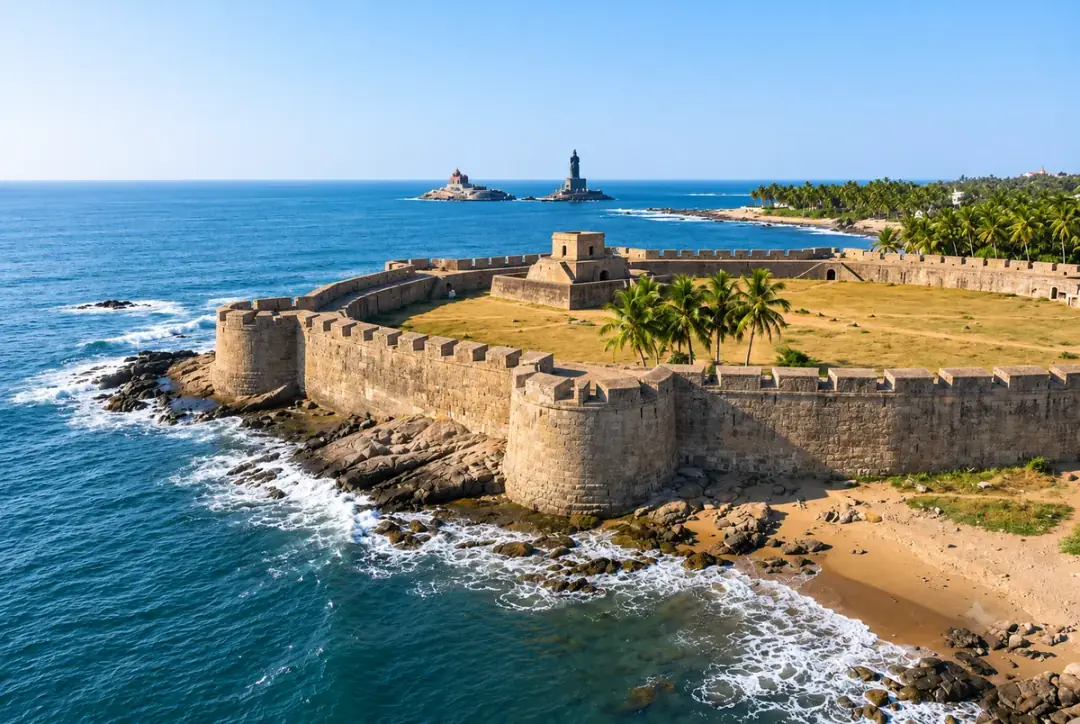
Constructed using massive granite blocks with coastal cannon embrasures and watchtowers, the fort ramparts provide panoramic views: looking out to sea, you see waves breaking over black volcanic sand, while turning inward reveals green coconut groves and the distant misty silhouette of the Western Ghats.
5. Padmanabhapuram Palace
Situated 35 km northwest of Kanyakumari near Thuckalay, Padmanabhapuram was the historic capital of the Kingdom of Travancore before shifting to Thiruvananthapuram. Built entirely of timber within an ancient granite fortress, it is universally recognized as the finest surviving example of traditional Kerala wooden palace architecture.
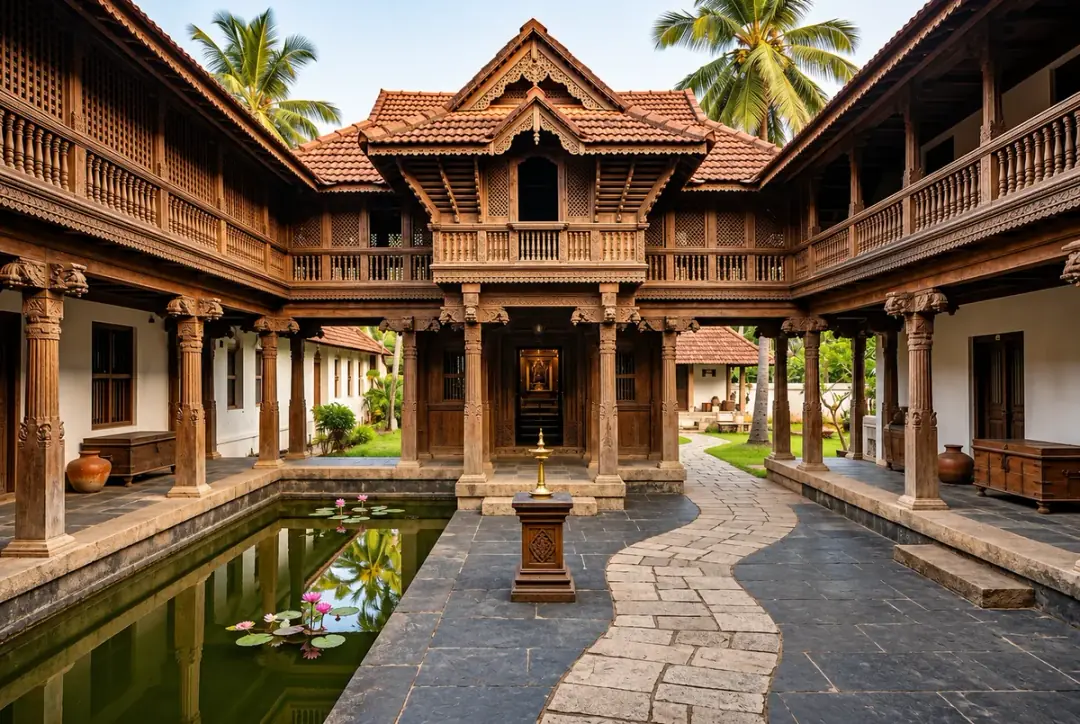
Wander barefoot across mirror-like black floors made of a secret historic mortar of burnt coconut shells, egg whites, and plant extracts. Key highlights include the King’s Council Chamber with mica-paned windows, the four-story Upparika Malika treasury, and the cavernous dining hall capable of seating 2,000 guests.
Kanyakumari Travel Highlights
| Landmark | Heritage Significance | Key Highlight | Best Visiting Window |
|---|---|---|---|
| Vivekananda Rock | Modern Spiritual Heritage | Dhyana Mandapam meditation hall, ferry crossing | 8:00 AM–11:00 AM |
| Thiruvalluvar Statue | Tamil Classical Literature | 133-foot granite monument representing Thirukkural | Morning ferry trip |
| Kumari Amman Temple | Ancient Sangam Period | Sacred Triveni Sangam bathing ghat, diamond nose stud | 4:30–11:30 AM & 4:00–8:00 PM |
| Gandhi Mandapam | Indian Freedom Movement | Solar skylight alignment on October 2nd | 9:00 AM–12:30 PM |
| Vattakottai Fort | 18th-Century Travancore | Circular seaside ramparts, black sand beach views | 3:30 PM–5:30 PM |
| Padmanabhapuram | 16th-Century Wooden Palace | Intricate teak carvings, polished black herbal floor | 9:00 AM–4:00 PM (Closed Mondays) |
Regional Day Trips Beyond Town
If you have extra time in the Kanyakumari district, consider exploring these inland natural and engineering landmarks:
- Suchindram Thanumalayan Temple: Located 11 km north, this 17th-century architectural masterpiece is unique in dedicating its sanctum to the Trimurti (Sthanu = Shiva, Mal = Vishnu, and Ayan = Brahma). Its 40-metre white gopuram and four musical stone pillars—which resonate with melodic musical notes when gently tapped—are extraordinary.
- Mathoor Hanging Aqueduct: Located near Thiruvattar, this 1 km-long concrete flume is one of the longest and highest aqueducts in Asia. Elevated 35 metres above the Pahrali River on 28 concrete pillars, visitors can walk along the upper observation walkway through lush coconut plantations.
- Thirparappu Waterfalls: Located 55 km from town, the Kodayar River plunges 15 metres over a 100-metre wide rocky weir into a serene river basin flanked by ancient Shiva temples.
Practical Travel Tips
- Best Season: October to March brings pleasant coastal breezes and daytime temperatures of 25°C–30°C. April and May can be hot and humid, while the Southwest and Northeast monsoons (June–November) bring dramatic stormy seas and sweeping rain clouds.
- Ferry Queue Strategy: On busy weekends and holiday periods, lines for the ferry can exceed an hour. Purchase the expedited special entry ticket if available at the jetty counter to minimize wait times under the midday sun.
- Local Seafood & Cuisine: Sample authentic Tamil and Travancore coastal meals—including crispy fish fry, appam with vegetable stew, banana chips fried in pure coconut oil, and regional red rice meals served on fresh plantain leaves.
Frequently Asked Questions
How many days are needed to explore Kanyakumari?
Two full days are recommended. Day 1: Sunrise at the coast, ferry to Vivekananda Rock and Thiruvalluvar Statue, Kumari Amman Temple, Gandhi Mandapam, and sunset at Sunset Point. Day 2: Day excursion to Padmanabhapuram Palace, Mathoor Aqueduct, and Vattakottai Fort.
Which is the nearest airport to Kanyakumari?
Trivandrum International Airport (TRV) in Kerala is the closest major airport, located 90 km away (approx. 2.5 to 3 hours by road or express train). Tuticorin Airport (TCR) is 115 km north.
Can you swim at the Triveni Sangam beach?
Swimming is strictly discouraged at the main sangam shore due to powerful cross-currents where the three bodies of water meet, along with submerged jagged granite boulders. Safe, shallow ritual bathing steps with safety chains are provided for pilgrims.
What are the best souvenirs to buy in Kanyakumari?
Traditional souvenirs include hand-carved conch shells, polished sea-shell wind chimes, local palm leaf crafts, unrefined palm jaggery (karupatti), and multi-colored mineral sand packets collected from the unique coastline.
Related Articles
Explore more insights and stories from this category.
Places to Visit in Udaipur: Travel Tips and Highlights
Explore places to visit in Udaipur, from City Palace and Lake Pichola to local markets. Discover top attractions, travel tips and memorable things to do.
Budget Travel Tips for Planning a Lower-Cost Trip
Use budget travel tips to save on transport, stays and meals. Get the best budget travel tips, how to travel in a budget and how to travel on budget.