Places to Visit in Udaipur: Travel Tips and Highlights
Explore places to visit in Udaipur, from City Palace and Lake Pichola to local markets. Discover top attractions, travel tips and memorable things to do.
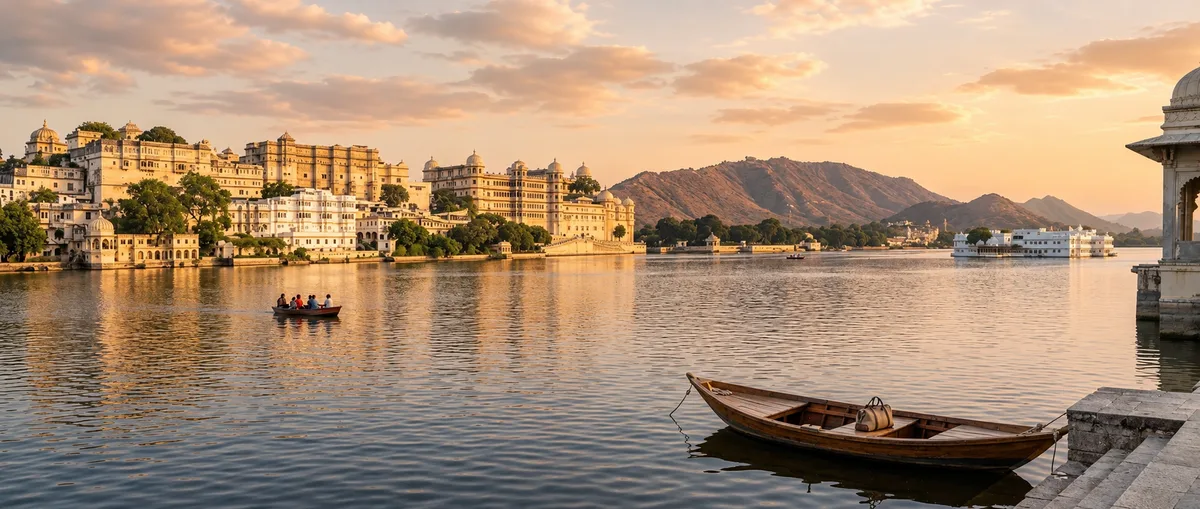
Udaipur, affectionately known as the "City of Lakes" and the "Venice of the East," is one of Rajasthan's most poetic destinations. Set against the rugged purple ridges of the ancient Aravalli Range, the historic capital of the Mewar Kingdom weaves together gleaming marble palaces, sacred medieval temples, calm artificial lakes, and lively artisanal bazaars.
Whether you are navigating the labyrinthine whitewashed alleys of the old city, cruising on Lake Pichola at golden hour, or sampling authentic Rajasthani cuisine from a lakeside rooftop, Udaipur offers royal grandeur at a surprisingly gentle, unhurried pace. This travel guide details the premier landmarks, boat cruise routes, cultural performances, and practical travel advice for an unforgettable Mewari holiday.
Bagore Ki Haveli Evening Show
Don't miss the nightly "Dharohar" folk dance show at Bagore Ki Haveli (7:00 PM to 8:00 PM). Arrive at the ticket counter by 5:30 PM to secure seating for the world-famous Rajasthani puppet and Chari fire dance performances.
Best Places to Visit in Udaipur for First-Time Travelers
These five cornerstone landmarks embody the architectural mastery, regal heritage, and lakeside charm of Udaipur.
1. The City Palace Complex
Rising dramatically along the eastern embankment of Lake Pichola, the City Palace is Rajasthan’s largest palace complex. Begun in 1559 by Maharana Udai Singh II and expanded by subsequent rulers over four centuries, the complex seamlessly blends Rajasthani, Mughal, European, and Chinese architectural influences.
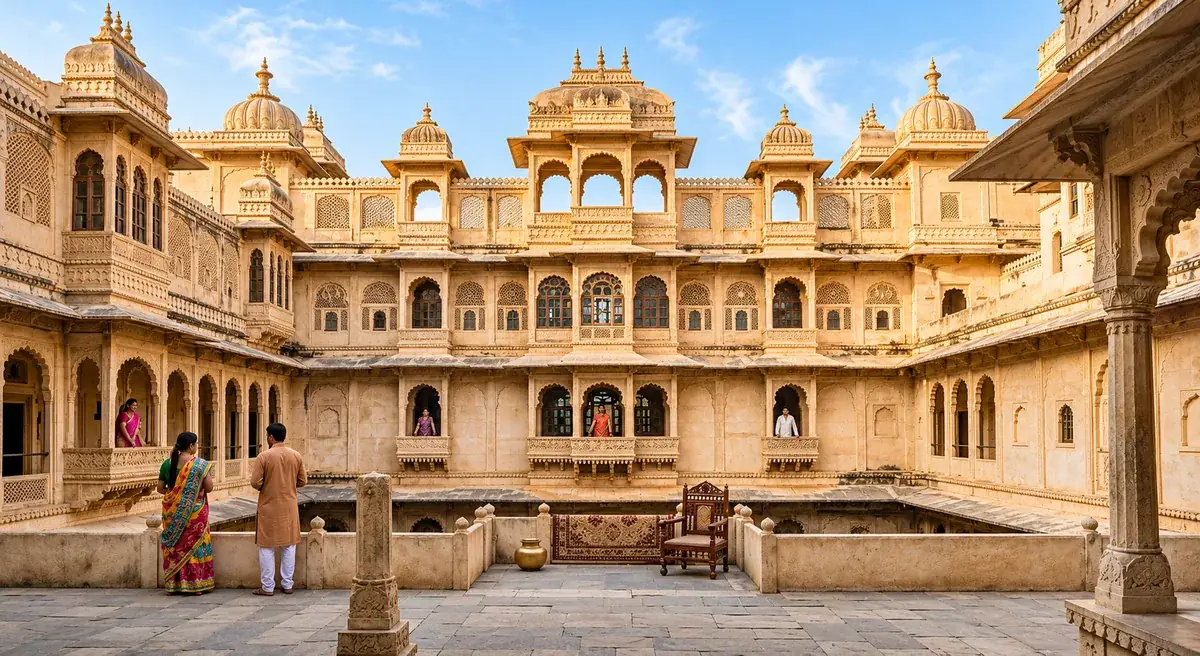
Wander through the Mor Chowk (Peacock Courtyard) adorned with vivid glass mosaic peacocks, marvel at the mirror-inlaid walls of the Kanch Mahal, and explore the Zenana Mahal galleries housing historic armor and miniature paintings. Allocate at least 2.5 to 3 hours to do justice to the museum exhibits and elevated lake terraces.
2. Lake Pichola and Boat Cruises
Created in 1362 AD by a local Banjara tribesman and later enlarged by Maharana Udai Singh II, Lake Pichola is the romantic heartbeat of Udaipur. Its tranquil waters reflect the whitewashed mansions, heritage havelis, and stone bathing ghats of the old town.
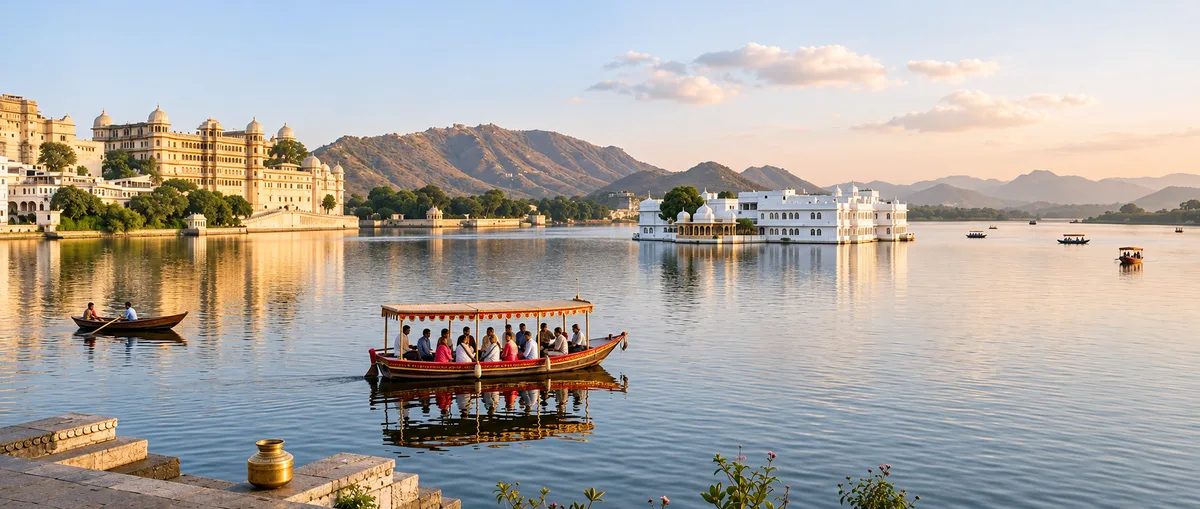
Board an official municipal or City Palace boat from Rameshwar Ghat for a 45-minute cruise around the Taj Lake Palace (Jag Niwas) and disembark for thirty minutes at the island palace of Jag Mandir. Late afternoon cruises (between 4:30 PM and 5:45 PM) provide prime views as dusk illuminates the palace facades in warm amber.
3. Jagdish Temple
Located just 150 metres outside the City Palace’s Badi Pol entrance, this magnificent Hindu temple was consecrated in 1651 by Maharana Jagat Singh I. Raised on a tall stone plinth, the Indo-Aryan temple features a 24-metre pyramidal shikhara (spire) covered in intricate carvings of dancers, musicians, elephants, and horsemen.
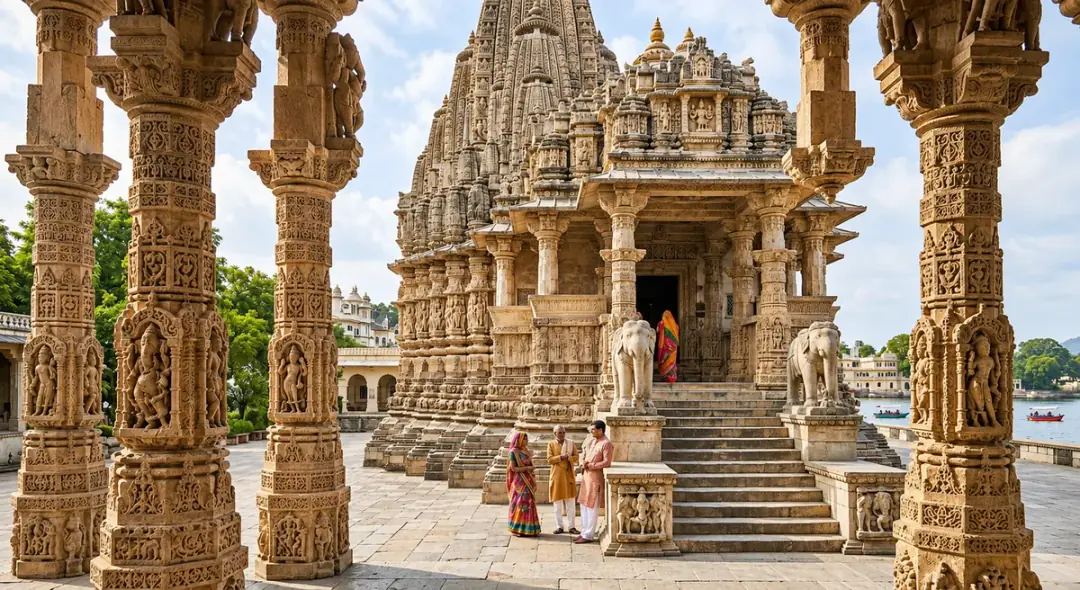
Ascend the 32 marble steps flanked by carved stone elephants to view the sanctum’s revered black stone four-armed idol of Lord Vishnu (Jagannath). Morning and evening aarti ceremonies resonate with rhythmic chanting and traditional bells.
4. Saheliyon Ki Bari (Garden of the Maidens)
Built in the early 18th century by Maharana Sangram Singh II on the banks of Fateh Sagar Lake, this lush garden retreat was designed as a private sanctuary for royal princesses and their attendant ladies-in-waiting.
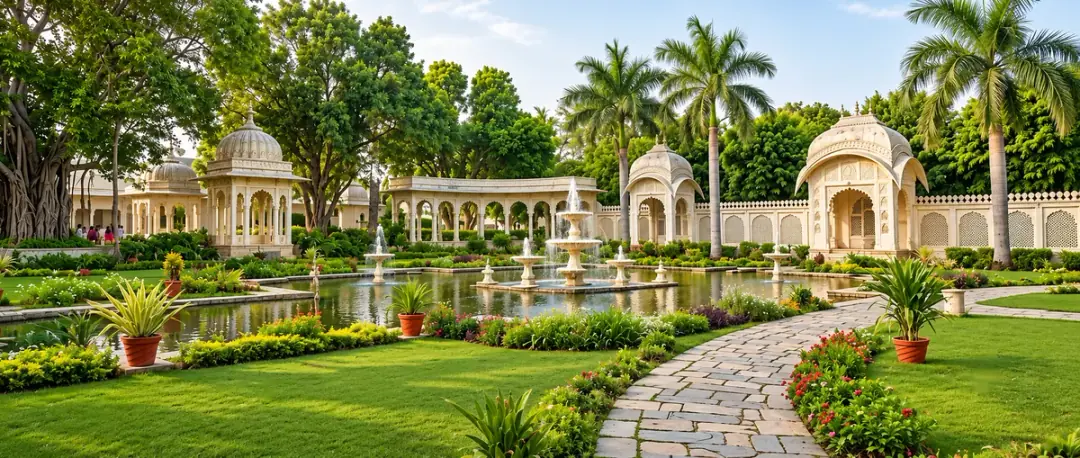
The garden features marble elephant fountains, carved bird kiosks that spray simulated rainfall, lotus flower pools, and shaded rose borders. The clever hydraulic system relies entirely on natural gravity pressure from Fateh Sagar Lake to operate all fountains without mechanical pumps.
5. Sajjangarh (The Monsoon Palace)
Perched atop Bansdara Hill at an elevation of 944 metres (3,100 feet), this 19th-century white palatial fortress was constructed by Maharana Sajjan Singh as an astronomical observatory and monsoon cloud-watching retreat.
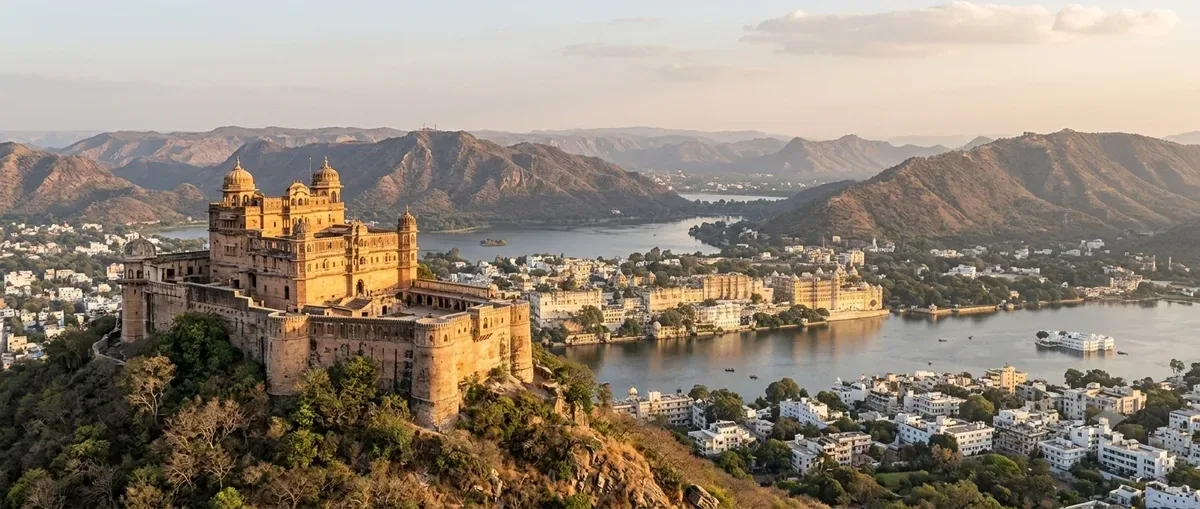
A scenic winding hill road climbs through the surrounding Sajjangarh Wildlife Sanctuary to the palace gates. The upper battlements provide panoramic 360-degree vistas across Udaipur’s lakes and the Aravalli valleys, making it the most famous sunset viewpoint in the region.
Udaipur Highlights Summary
| Landmark | Historical Era | Key Feature | Ideal Visit Window |
|---|---|---|---|
| City Palace | 16th–20th Century | Mewar museum, glass mosaic courtyards, lake balconies | 9:30 AM–12:30 PM |
| Lake Pichola | 14th Century | Sunset boat rides, Jag Mandir island exploration | 4:30 PM–6:00 PM |
| Jagdish Temple | 1651 AD | Detailed stone carvings, Lord Vishnu shrine, live aarti | 7:00 AM or 6:30 PM |
| Saheliyon Ki Bari | 18th Century | Gravity-fed marble fountains, lotus ponds | 10:00 AM–11:30 AM |
| Monsoon Palace | 1884 AD | Elevated Aravalli mountain views, wildlife sanctuary | 4:30 PM–6:30 PM |
| Bagore Ki Haveli | 18th Century | Gangaur Ghat, evening folk dance performance | 6:00 PM–8:00 PM |
Local Bazaars and Cultural Experiences
Beyond the primary monuments, exploring Udaipur’s bustling street markets and traditional craft studios reveals centuries of artisan legacy:
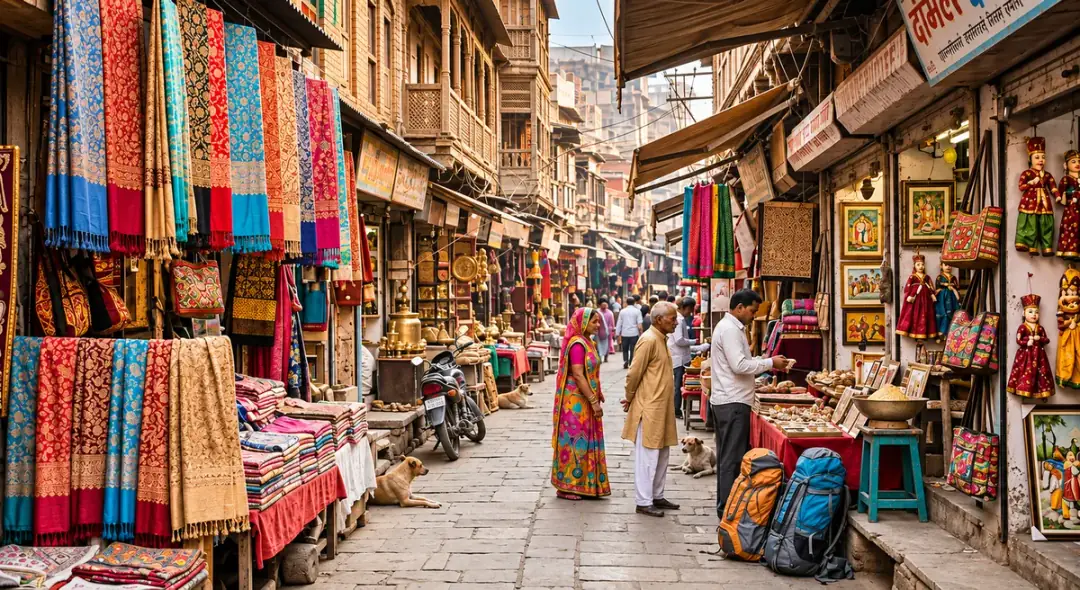
- Mewar Miniature Painting: Visit artisan studios around Jagdish Chowk to watch master artists paint on silk, camel bone, and vintage paper using squirrel-hair brushes and natural stone pigments.
- Bada Bazaar and Hathi Pol: Browse for block-printed cotton quilts (jaipuri razai), embroidered leather mojri shoes, silver tribal jewelry, and hand-loomed bandhani dupattas.
- Traditional Mewari Dining: Savor authentic Dal Baati Churma (lentil stew with baked wheat dumplings and sweetened crushed wheat), spicy Ker Sangri (desert berry stir-fry), and creamy Gatte ki Sabzi at traditional diners like Natraj or Krishna Dal Bati Restro.
Practical Udaipur Travel Tips
- Best Season: October to March brings warm, sunny days (22°C–28°C) and cool, pleasant evenings (10°C–14°C). The monsoon (July to September) transforms the surrounding hills into lush green landscapes and refills the lakes.
- Getting Around the Old City: The narrow, winding lanes around Gangaur Ghat and Jagdish Chowk are inaccessible to large cars and tourist buses. Travel on foot or hire nimble three-wheeled auto-rickshaws for short trips.
- Rooftop Etiquette: Many heritage hotels around the lake host rooftop cafes. Booking a dinner table overlooking the illuminated City Palace and Lake Palace delivers one of the most romantic dining experiences in Asia.
Frequently Asked Questions
How many days are needed to see Udaipur properly?
A 3-day itinerary is ideal. Day 1: City Palace, Jagdish Temple, old city walk, and Lake Pichola sunset cruise. Day 2: Saheliyon Ki Bari, Fateh Sagar Lake, and the Sajjangarh Monsoon Palace. Day 3: Shilpgram cultural village, local bazaar shopping, and an evening show at Bagore Ki Haveli.
Can I visit Kumbhalgarh Fort and Ranakpur Jain Temple from Udaipur?
Yes. Kumbhalgarh Fort (home to the world's second-longest continuous wall) and the exquisite marble temples of Ranakpur make an exceptional full-day road trip from Udaipur (approx. 2.5 hours each way).
Is photography permitted inside City Palace?
Yes. Still camera and smartphone photography are permitted inside the museum upon paying the nominal camera fee at the ticket window. Commercial tripod use and drone photography require advance written permission from the palace trust.
Where is the best spot to watch the sunset in Udaipur?
The two best sunset vantage points are the battlements of Sajjangarh (Monsoon Palace) for dramatic panoramic mountain skies, and a boat ride on Lake Pichola for warm golden reflections shimmering across the water.
Related Articles
Explore more insights and stories from this category.
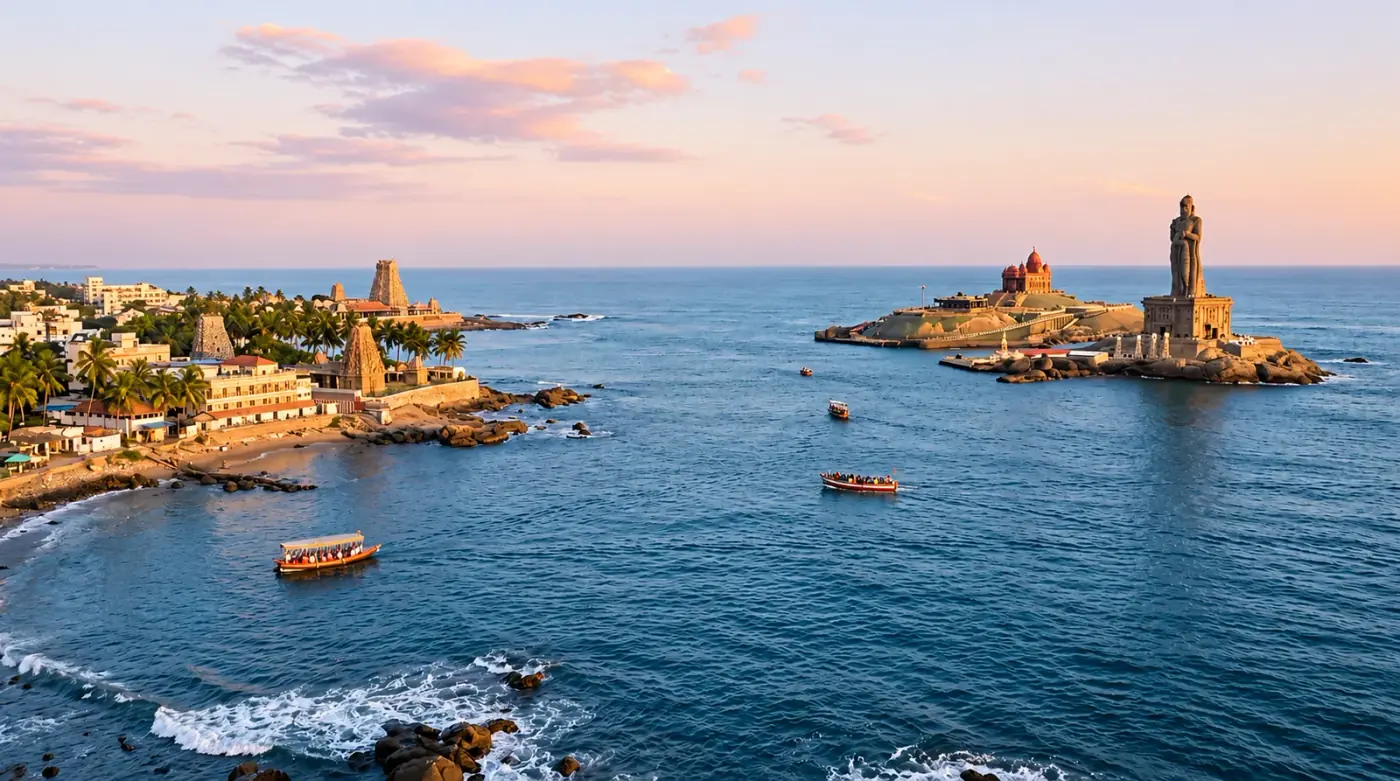
Places to Visit in Kanyakumari: Travel Tips and Highlights
Explore the top places to visit in Kanyakumari, from coastal landmarks to historic sites. Use this list of attractions and travel tips to plan your trip.
Budget Travel Tips for Planning a Lower-Cost Trip
Use budget travel tips to save on transport, stays and meals. Get the best budget travel tips, how to travel in a budget and how to travel on budget.